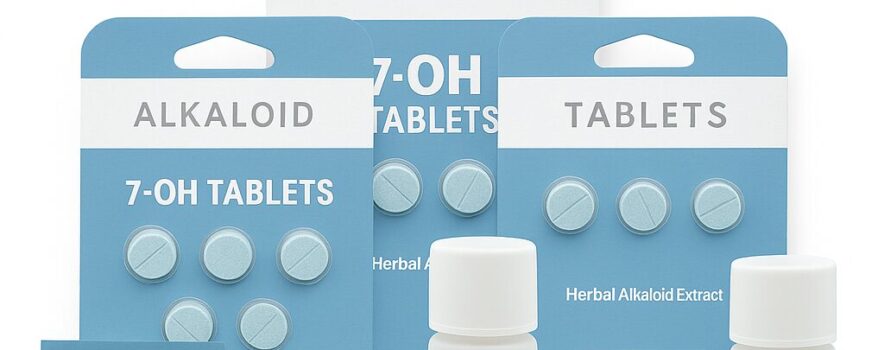
7-OH is a potent extract of kratom leaf and has emerged as a contentious substance in the modern drug landscape. Its largely legal status and ease of access have led to its rise in popularity, with public health officials sounding the alarm about a potential overdose crisis.
Table of Contents
- Key Takeaways
- What is 7- OH?
- Wait, what is kratom?
- How did Kratom evolve into 7-OH?
- Spiked kratom products: the problem of mislabeled 7-OH
- Is 7-OH a drug? Why 7-OH acts like an opioid
- Where is 7-OH sold?
- 7-OH side effects and withdrawal symptoms
- What’s the difference between kratom and 7-OH?
- FDA recommends banning 7-OH, not all kratom
- Is the US facing a new opioid crisis?
- Struggling with 7-OH dependency? You’re not alone
- FAQs about 7-OH
Key Takeaways
- 7-OH (7-hydroxymitragynine) is not the same as kratom leaf. It is a chemically concentrated derivative that acts like a powerful opioid agonist and carries significantly higher risks.
- Many products sold as “spiked” or “enhanced kratom” actually contain concentrated 7-OH, often without clear labeling, leading consumers to unknowingly use a much more dangerous substance than traditional kratom.
- 7-OH has been shown to be far more potent than morphine, with a greater risk of respiratory depression and overdose compared to typical opioids.
- Poison Centers and the FDA have reported rising health incidents tied specifically to 7-OH exposure, including hospitalizations for serious adverse effects.
- 7-OH products are widely accessible, frequently sold in gas stations, vape shops, and online marketplaces, increasing the risk of misuse.
- Health authorities are now urging regulators to schedule and restrict 7-OH, while allowing continued regulation of natural kratom leaf products.
- Public health officials fear 7-OH could drive a new wave of opioid-related harm if left unregulated.
What is 7- OH?
Sometimes called legal morphine or gas station heroin, 7-hydroxymitragynin (7-OH) is a rising health concern today. Basically, the most potent alkaloid (chemical) in kratom leaves is isolated and concentrated, with the resulting product being 500 times stronger than kratom leaves in their natural form. It’s often marketed as spiked, or enhanced kratom, while in truth it’s an addictive, opioid-like substance.
Wait, what is kratom?
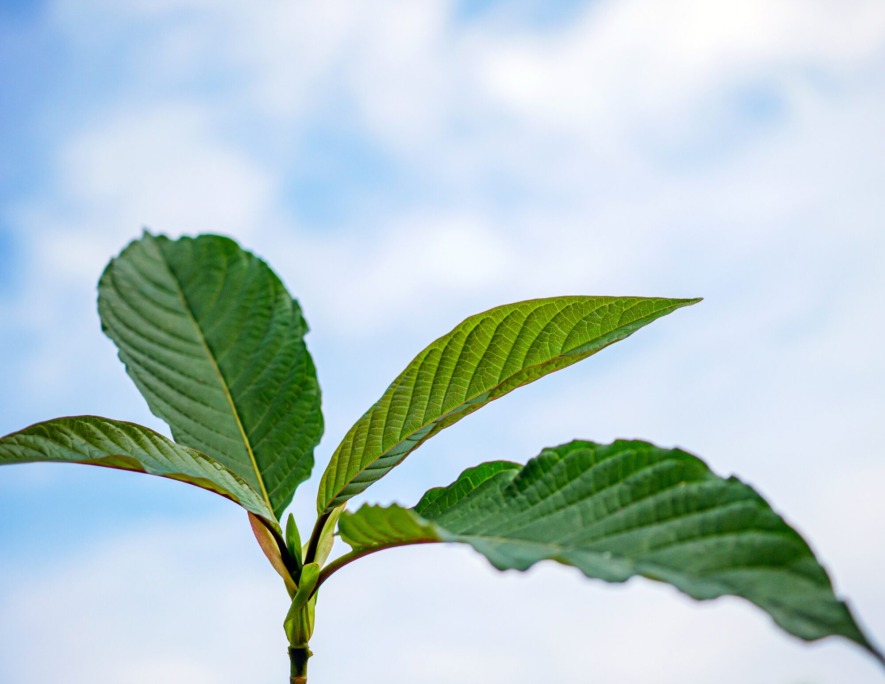
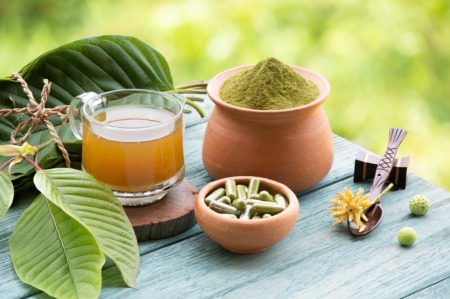
Kratom leaves, the parent of 7-OH, come from the Mitragyna speciosa tree, an evergreen tree native to Southeast Asia, where they were used for traditional medicine. Today, an estimated 2-15 million Americans use kratom recreationally, to self-medicate for mental health, to relieve opioid withdrawal symptoms, to treat chronic pain, and as a mood booster.
How did Kratom evolve into 7-OH?
While kratom is (arguably) a relatively benign substance, to increase its effects, manufacturers have been isolating its key compound- 7-OH- and making it way more powerful. The shift happened slowly, and often surreptitiously.
Products sold as kratom might just contain some concentrated 7-OH, with many confusing 7-OH with kratom. Being that kratom use generally has no ‘substance use’ stigma attached to it, these ‘spiked’ kratom products, which are often primarily 7-OH, quickly rose in popularity.
Spiked kratom products: the problem of mislabeled 7-OH
The FDA warns that many products marketed as kratom are actually concentrated derivatives of 7-OH. “Enhanced” or “spiked” kratom products may appear to be natural leaf but actually contain as much as 500% more 7-OH than would be expected naturally. (-in kratom leaves)”
Even the American Kratom Association recently issued a consumer alert on synthetically concentrated 7-OH products, noting that they are “deceptively” labeled and marketed as “kratom.” The association has warned that products with 7-OH levels that exceed 2% of the overall alkaloid content are no longer kratom.
Medscape reported that “Recently, independent lab tests commissioned by regulators in Texas and Colorado have found some 7-OH pills exceeding 40% purity and mislabeled as “kratom extract.” Professor Kirsten Smith, a lead researcher on kratom, notes that “To date, 7–hydroxymitragynine product marketing fails to distinguish itself from kratom.” The FDA is working to alert the public to the issue, specifically to distinguish 7-OH from the kratom leaf.
Is 7-OH a drug? Why 7-OH acts like an opioid
7-hydroxymitragynine (7-OH) has all the common characteristics of standard opioids. It acts as a potent opioid receptor agonist, meaning it binds to the same receptors in the brain that drugs like morphine and oxycodone do. It carries the same risks as seen with traditional opioids, including tolerance, dependence, withdrawal symptoms, and respiratory depression at high doses.
A study found 7-OH to be thirteen times more potent than morphine, and an FDA assesment reports that 7-OH produces respiratory depression more than 3 times greater than morphine, suggesting that 7-OH may be even more harmful than traditional opioids.
The American Poison Centers report that in 2025, there have been 165 reports of exposures to 7-OH. Of patients reporting exposure to 7-OH alone, 35% had serious health problems and 67% were treated at a healthcare facility.
Where is 7-OH sold?
Compounding the dangers is the easy access to 7-OH products. Pills, drinks, gummies, and more containing 7-OH are sold in gas stations, local vape shops, and user-friendly online websites. This led to 7-OH being dubbed ‘gas station heroin’, or legal morphine.
7-OH side effects and withdrawal symptoms
The American Poison Center reports the following side effects after 7-OH use; nausea and vomiting, agitation, confusion, sweating, rapid heart rate, high blood pressure, trouble breathing, sleepiness or loss of consciousness, and seizures.
Withdrawal symptoms include muscle aches, restlessness, anxiety, insomnia, nausea, sweating, chills, diarrhea, mood changes, and intense drug cravings.
What’s the difference between kratom and 7-OH?
While 7-OH is a derivative of kratom leaf, and is often confused with natural kratom, it’s a completely different product. While kratom safety is a highly debatable subject, with passionate voices on both sides, 7-OH has quickly proven itself to be a dangerous, addictive substance.
By isolating one of the key active compounds responsible for kratom’s opioid-like effects- the alkaloid 7‑Hydroxymitragynine, commonly known as 7‑OH, you get a product up to five hundred times stronger than kratom in its natural form. Instead of the mild opioid-like effects that kratom gives you, you get concentrated opioid-like effects. (in other words, standard opioid effects)
Professor Kirsten E. Smith, a lead researcher on kratom, writes; “Apart from toxicity risks from acute exposure, chronic 7-hydroxymitragynine product use could result in opioid-like physical dependence and possibly addiction. Scale and severity may be distinct from kratom leaf-based and extract products, which have not produced widespread severe addiction, but rather mild–moderate physical dependence”
Dr Martin A. Makary of the FDA, in a letter to all US physicians, writes “These concentrated 7-OH opioid products are far more dangerous than traditional kratom leaf products”
FDA recommends banning 7-OH, not all kratom
After a move to schedule kratom in 2015 fell through, and considering emerging data about the difference between the two, health officials are now making an important distinction. Instead of banning kratom and 7-OH, the FDA is pushing to have just 7-OH, the synthetic, more potent form of kratom, scheduled. Some states have already taken this approach, and others have pending legislation to have just 7-OH banned.
On July 29, 2025, the FDA made an official recommendation that the DEA schedule 7-hydroxymitragynine. They recommend regulating kratom sales; while making 7-OH completely illegal “7-OH is an opioid that can be more potent than morphine. We need regulation and public education to prevent another wave of the opioid epidemic.” -Dr Martin A. Makary, FDA
Is the US facing a new opioid crisis?
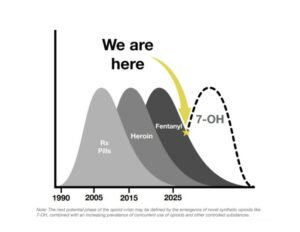
Public health officials fear that we may be on the cusp of a new opioid crisis, fueled by 7-OH, and are doing everything they can to prevent it.
“Even better than rolling back a public health crisis would be never having one in the first place: Let’s not allow 7-OH to drive the next wave of the U.S. opioid epidemic.” – Marty Makary, M.D., M.P.H., FDA Commissioner
Struggling with 7-OH dependency? You’re not alone
If you or someone you love is struggling with 7-OH use, support is available. Wellbrook Recovery offers compassionate, confidential care to help individuals safely take the first steps toward recovery.
Our rehab centers provide:
- 24/7 medically supervised detox
- Residential longer-term inpatient care
- Individualized treatment programs
- Therapy for co-occurring mental health conditions
- Long-term recovery support
Recovery is possible. Call us today for compassionate, confidential help.
FAQs about 7-OH
Is 7-OH legal in the US?
There are no FDA-approved 7-OH drugs, 7-OH is not lawful in dietary supplements and 7-OH cannot be lawfully added to conventional foods. However, in most states, owning or selling 7-OH is still legal.
Are people actually addicted to 7-OH? Can 7-OH be addictive?
Like any opioid, use of 7-OH has potential for addiction, withdrawal issues, and everything else that comes along with opioid use.
Where is 7-OH sold?
7-OH products are sold in gas stations, online, and at the local vape shop. The widespread availability and ease of purchase of these drugs is very concerning to health and government officials.
What’s The Difference between Kratom and 7-OH?
Unlike the milder kratom leaf, 7-OH is a highly addictive drug with opioid-like characteristics.
What is 7-OH?
7-hydroxymitragynine (7-OH) is a concentrated extract derived from kratom leaf that acts like a powerful opioid.
Why is 7-OH considered risky?
7-OH strongly activates opioid receptors, increasing the risks of dependence, withdrawal, respiratory depression, overdose, and addiction.
How strong is 7-OH compared to opioids?
Studies show it may be many times more potent than morphine and capable of causing greater respiratory depression.
Why are people confusing kratom and 7-OH?
Many products labeled as “spiked” or “enhanced kratom” actually contain added 7-OH without clear labeling, leading people to believe they are using regular kratom when they are not.
What side effects are linked to 7-OH use?
Reported effects include nausea, agitation, sweating, confusion, rapid heart rate, seizures, extreme drowsiness, trouble breathing, and loss of consciousness.
Does 7-OH cause withdrawal symptoms?
Yes. Withdrawal may include anxiety, insomnia, muscle aches, diarrhea, chills, mood changes, and intense cravings.
Could 7-OH lead to a new opioid crisis?
Public health officials believe the unchecked spread of 7-OH could contribute to another wave of opioid-related harm.