If you’ve ever read news about controlled substances or looked closely at a prescription label, you’ve probably seen the term drug schedule. Perhaps you were prescribed a drug and been told it’s Schedule II, or III. It left you wondering; what are drug schedules, and how does drug classification work? And why is there so much controversy surrounding drugs scheduling and controlled substance categories?
Here’s the full rundown of what drug ‘schedules’ are, how they’re determined, and how they impact drug users, lawmakers, researchers, scientists, and average human beings.
What are drug schedules? – controlled substance classifications
Drug schedules were established under the Controlled Substances Act of 1970, signed into law by President Richard Nixon. This system was created to help regulate substances that could cause harm through misuse, dependence, or addiction. It remains the main DEA drug scheduling framework used today.
Drugs are assigned to one of five schedules based on the following criteria:
- Their potential for abuse
- Their accepted medical use in the United States
- Their safety and potential for addiction
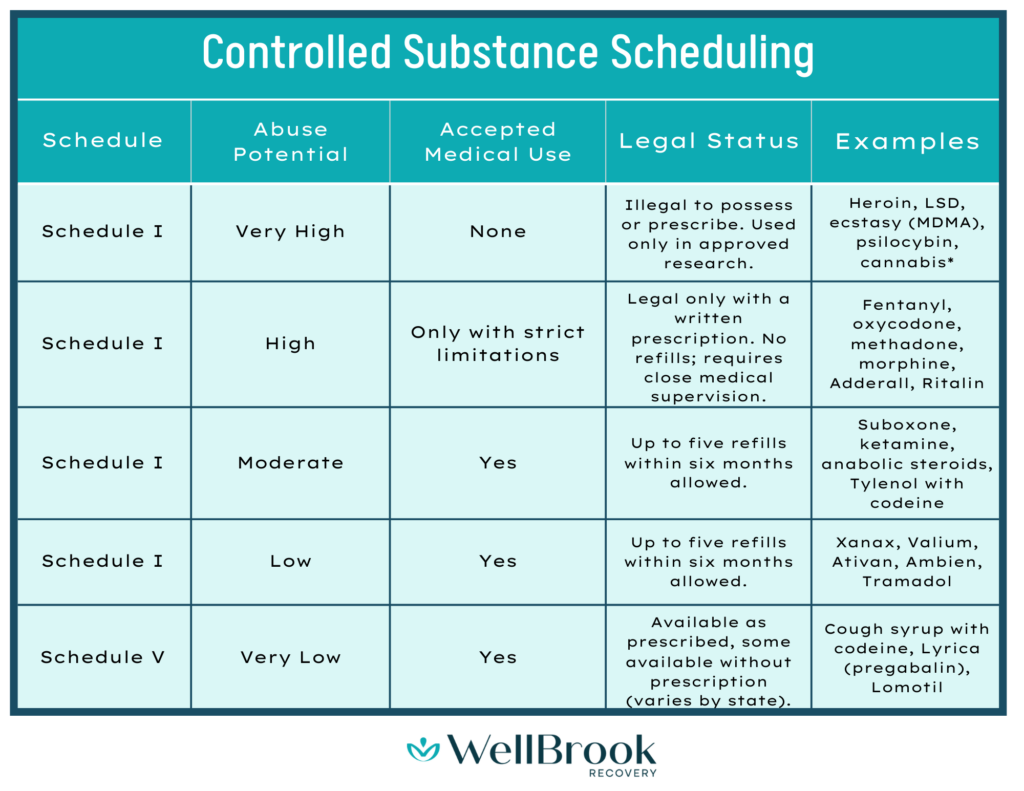
The five drug schedules – the DEA drug scheduling system
What is Schedule I ?
Schedule I drugs have high potential for abuse, no currently accepted medical use and are illegal to possess or sell. These are considered the most dangerous controlled substances.
Examples: Heroin, MDMA (Ecstasy)
What is Schedule II?
Schedule II drugs have high potential for abuse, some accepted medical use, and are strictly regulated to prescribe under controlled substance laws.
Examples: Fentanyl, oxycodone (OxyContin®, Percocet®), morphine, methadone (Dolophine®), amphetamine (Adderall®) cocaine, codeine
What is Schedule III?
Schedule III drugs have moderate abuse potential, accepted medical use, and some prescription regulations
Examples: Tylenol with Codeine®, buprenorphine (Suboxone®), ketamine, and anabolic steroids (including testosterone in many forms).
What is Schedule IV?
Schedule IV drugs have moderate to low abuse potential, accepted medical use and similar prescription regulations to Schedule III.
Examples: Xanax®, clonazepam (Klonopin®), diazepam (Valium®)
What is Schedule V?
Schedule V drugs have the lowest (but some) abuse potential, are accepted for medical use, have some prescription regulation, but are sometimes available over the counter.
Examples: cough syrup with codeine (e.g., Robitussin AC®), pregabalin (Lyrica), Lomotil
Source: NCBI – Drug Scheduling Overview
For more detailed information on all controlled substances, see the DEA controlled substance sheet.
Are all drugs scheduled?
No. Only substances with abuse potential need to be scheduled as controlled substances.
Most over-the-counter drugs, antibiotics, heart medications, and countless others, aren’t scheduled. As long as a drug poses no significant disk of dependence or recreational misuse, it remains unscheduled, and is regulated through the FDA.
How are drugs scheduled? – the DEA scheduling process
The decision to schedule a drug typically starts with a recommendation or petition from congress, the DEA, the FDA, or the general public. This is the beginning of the DEA drug scheduling process.
From there, the HHS provides the scientific research about the drug. The DEA then has the final say as to whether a drug gets scheduled.
Rescheduling often occurs when new information emerges about a drug’s risks or medical benefits.
Why are drugs scheduled?
Drug scheduling exists to protect public health by;
- Clearly establishing the risks and benefits of the substance
- Regulating illegal distribution
- Guiding doctors on prescribing practices
- Supporting researchers and lawmakers in developing public health policies
For example, Schedule II opioids like oxycodone are medically useful but have contributed significantly to the opioid epidemic when misused. The strict regulations placed on these substances help reduce their availability for non-medical use and lower prescription drug misuse.
Doctors know how cautious they have to be in prescribing the drug. Users can understand the risks associated with their prescribed drug. Family and friends know if they need to look out for signs of addiction in loved ones.
The controversy surrounding drug scheduling
Drug scheduling is always in the news- for good reason. Deciding if a substance should be scheduled and what categories they should be placed into is a hot, and often very controversial, subject.
-Families who lost a loved one to substance abuse often push to have those substances scheduled.
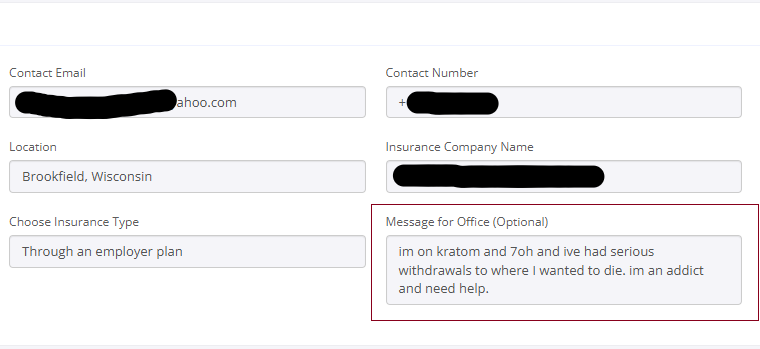
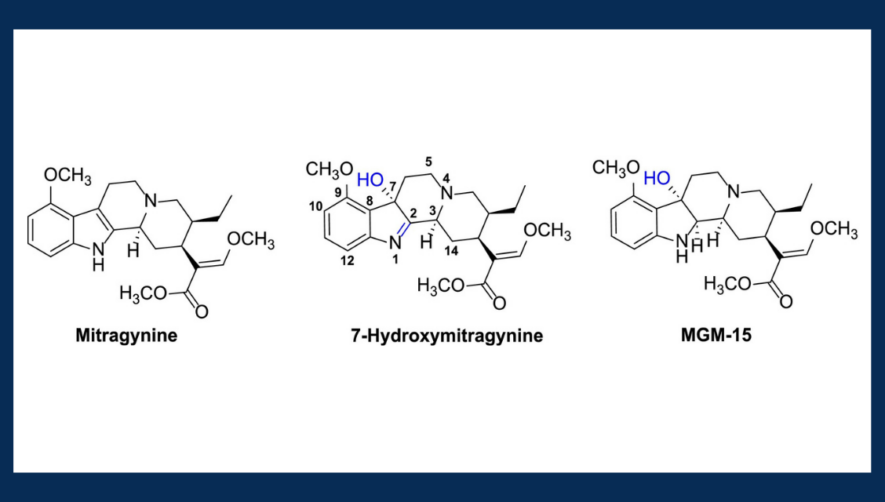
-Users of specific substances, such as kratom or 7-OH, vehemently oppose the scheduling, afraid that they may lose access to their drugs
-Others claim that scheduling just pushes the drug market underground, leading to zero regulation.
-Scientists argue that when a substance is placed in Schedule I, they can’t properly study the substance, because access to the substance is severely limited.
-Lawmakers feel that substances must be scheduled to protect public health.
It’s a complicated process- often with passionate voices on both sides.
What do schedules have to do with addiction rehab?
For those navigating addiction or entering recovery, understanding drug scheduling is key to helping themselves get better. Awareness is the crucial aspect that allows one to safely take needed drugs without relapsing into addiction or increasing addiction risk.
For instance, a person recovering from opioid addiction might be prescribed a Schedule II pain medication after a surgery. Knowing the potential addictive qualities of the drug empowers the user to ask questions, plan alternative pain management options, or involve another person to assist in monitoring their medication.
Too many Americans have had their life irrevocably altered by prescription drug misuse. The first step in fighting prescription drug misuse is knowledge, and that is exactly what scheduling drugs does- provides users with clear knowledge of the risks associated with the drugs they are using.