BTMPS. Quetiapine. Seroquel. Ketamine. Xylazine. Nitazines. And now, medetomidine. All not what you asked for. All dangerous substances. All these adulterants surreptitiously being added to the Midwest illicit drug supply to increase sellers’ profits, while shamelessly increasing users’ risks.
Table of Contents
- What is medetomidine (rhino tranq)?
- Why is medetomidine added to illicit drugs?
- The rise of medetomidine in fentanyl and the illicit drug supply
- Medetomidine effects and health risks:
- Medetomidine basics- What to know about medetomidine
- The bigger problem: what medetomidine reveals about the Midwest drug supply
What is medetomidine (rhino tranq)?
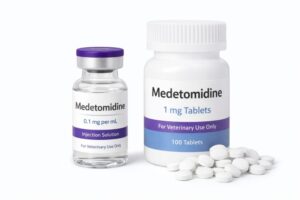
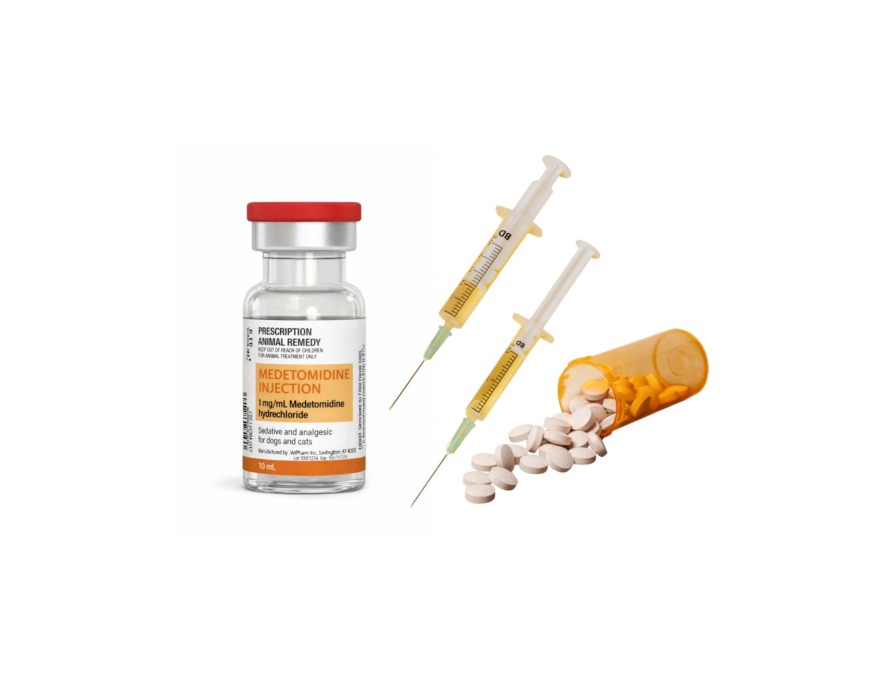
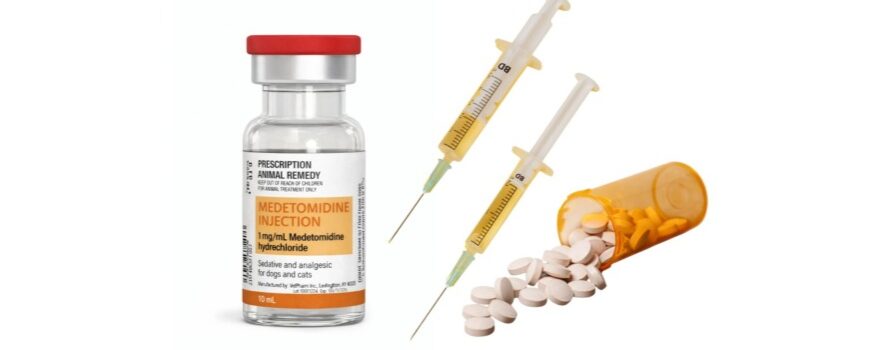
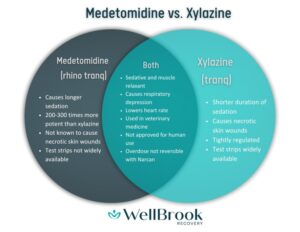
Medetomidine, often referred to on the street as ‘rhino tranq’, is a sedative used for animals, primarily cats and dogs, and is sold under the brand name Domitor®. Medetomidine belongs to the same drug class as xylazine but is two to three hundred times more potent. Its effects also last longer than xylazine. Medetomidine is measured in micrograms and xylazine in milligrams (1/1000).
It’s important to note that the drug is only FDA approved for veterinary medicine and is not approved for human use. There is a different version of medetomidine, called dexmedetomidine, that is approved for human use, but that is not a drug that is abused.
Xylazine: Background & context on the more popular medetomidine “cousin”
Xylazine, commonly referred to as ‘tranq’, is a sedative used on large animals, like horses and elephants. It began appearing in the US drug supply in about 2015 and was quickly identified as a cause of overdose deaths. Tranq was added to the drug supply for its sedative effects, as it prolongs and enhances the effects of other opioids. Xylazine is extremely potent and is known to cause necrotic wounds at the injection site.
Being cheap and easy to obtain, xylazine became an attractive choice for drug manufacturers. Once it was identified as a driver in overdoses, regulations surrounding it were tightened and xylazine test strips became widely available in many areas.
Why is medetomidine added to illicit drugs?
Researchers hypothesize that the sudden rise of medetomidine might be in response to the tightening of regulation around xylazine. Medetomidine is a similar substance to xylazine, just not as tightly regulated, so once xylazine was harder to access, drug dealers switched to medetomidine.
In fact, Substance Use Philly reported that since the spike in medetomidine there was a significant decrease in the number of patients seeking treatment for xylazine-associated wounds, and a decrease in the presence of xylazine in the illicit drug supply, providing a data point backing this theory.
The rise of medetomidine in fentanyl and the illicit drug supply
- Medetomidine was first reported in the US in 2021. Ohio’s national syringe checking program submitted samples containing medetomidine. Since then, each year there has been a significant rise in the number of reported cases with medetomidine found.
- In 2022, medetomidine was found in Maryland mixed with fentanyl.
- During mid-to-late 2023, scientists randomly found medetomidine in specimens collected from overdose patients across the US. (Specifically, California, Colorado, Florida, Maryland, Missouri, North Carolina, Ohio, and Pennsylvania.)>
- In 2024, large scale overdose clusters were reported in several large US cities, and were tied to drugs adulterated with medetomidine. These cities include Chicago, Illinois, Philadelphia, Pennsylvania, and Dane County, Wisconsin.
Medetomidine in Wisconsin
In June of 2024, Dane County faced a sudden overdose spike. Health officials reported a 48-hour surge in drug overdoses in the community as well as reports of unusual symptoms after drug use. Officials suspect that the spike was tied to medetomidine being added to the drug supply.
In response, Public Health Madison & Dane County issued an Overdose Spike Alert about the overdose surge.
“Medetomidines’ presence in the illicit drug supply is an emerging public health issue across the nation,” said Michelle Haese, state Department of Health Services director of substance use initiatives, in an email to the Milwaukee Journal Sentinel “Wisconsin remains committed to monitoring this trend closely.”
In August 2025, the Wisconsin Society of Addiction Medicine shared a CDC webinar on medetomidine with medical professionals statewide. They emphasize the importance of recognizing medetomidine-related overdose symptoms and withdrawal patterns
Medetomidine in Ohio
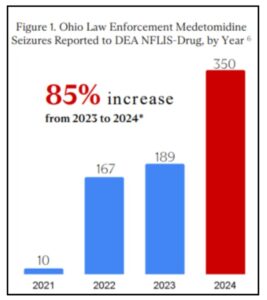
Ohio has emerged as a national leader in medetomidine detection. The state was amongst the first in the country to report medetomidine lab submissions from law enforcement seizures to the DEA. In 2024, Ohio made up fifteen percent of national lab submissions.
Medetomidine lab submissions from law enforcement seizures in Ohio have consistently increased since 2021, with significant increases from 2023 to 2024. The drug was usually found mixed with fentanyl. Recent 2025 lab and surveillance data indicate medetomidine continues to appear in Ohio’s illicit drug supply, particularly in urban counties.
Medetomidine effects and health risks:
What are the symptoms of medetomidine in humans?
Science Direct reports the following symptoms associated with medetomidine use:<
- profound sedation
- bradycardia (slow heartbeat)
- hypotension (low blood pressure)
- central nervous system depression
Researchers also hypothesize that the drug is causing hallucinations. “Drug checking samples containing medetomidine are more likely to include reports of hallucinations than samples not containing medetomidine.”
What are medetomidine withdrawal symptoms?
Medetomidine can produce a severe withdrawal syndrome that is characterized by
- tachycardia
- severe hypertension<
- waxing and waning alertness
- tremor
- intractable nausea and vomiting
What does an overdose on medetomidine look like? And how to treat a medetomidine overdose.
First responders and clinicians noted atypical overdose symptoms, with little or no response to naloxone administration. They also report prolonged sedation, which requires adapting overdose response protocols.
While in typical overdose cases, first responders attempt to restore consciousness in the patient, with medetomidine; the goal is different. Because medetomidine has such long lasting sedative effects, medical professionals advise focusing on supportive breathing and adequate oxygen intake, rather than restoring full consciousness.
Medetomidine basics- What to know about medetomidine
Is medetomidine an opioid?
No, medetomidine is not an opioid, nor is it a controlled substance (not strictly illegal to sell or purchase). It is a veterinary tranquilizer and therefore has tranquilizing effects.
Are users addicted to medetomidine?
Like xylazine, medetomidine is not something users are actively seeking out. The issue is that once it’s added to their drugs too many times, they can and do become addicted and dependent on the substance.
Will Narcan work on a medetomidine overdose?
While Narcan won’t work on the medetomidine aspect of the overdose, always give Narcan in cases of suspected overdose. Medetomidine is usually mixed with fentanyl or other opioids, and Narcan will work on the opioid aspect of the overdose. Be prepared to give additional doses of Narcan as needed and provide supportive breathing measures.
The bigger problem: what medetomidine reveals about the Midwest drug supply
Medetomidine reinforces the same issue that started with fentanyl, and continued with xylazine, nitazines, BTMPS, quetiapine, and now medetomidine- dealers will do anything to increase their profits, and the drug supply is becoming more volatile and unpredictable than ever
For users, that means they can never be sure just what drug they are taking, thus increasing overdose risk.
For lawmakers, harm reduction officials, and first responders, it means being on top of an ever-changing drug landscape and adjusting regulation, responses, and education appropriately.
Ryan Schneider CSW, CSAC Clinical Director at Wellbrook Recovery, expressed the concerns that health professionals in the US feel regarding Medetomidine:
“An emerging yet so unrecognized threat with this kind of potency is a nightmare for those of us treating individuals struggling with SUD. The regulatory, legal and healthcare authorities on a local and national level will need to jump and get ahead of medetomidine so that we can stem the flow and be equipped to handle emergencies and treatment related to this substance. With the dangerous and unclear effects of medetomidine, unusual bradycardia, prolonged nervous system depression, hypotension, all of these with the absence readily available testing, complicate the treatment and diagnosis criteria for us as providers.”