Admitting you might need help is hard. It can feel scary. Yet it’s the first step toward getting your life back. Many people only reach this point after a health scare, a breakup, or a close call. You don’t have to wait for rock bottom.
If you’ve been asking, do I need rehab? Or why do people go to rehab? Then this is for you and for the people who love you. In this article, Wellbrook Recovery, experts in addiction treatment and rehabilitation, walk you through the signs that indicate you may need rehab and explain the reasons to go to rehab.
Table of Contents
Key Takeaways
- Admitting you may need rehab is a critical first step toward recovery.
- Signs you need to go to rehab include prioritizing substance use, failed attempts to quit, and relationship or work problems.
- Physical dependence, withdrawal symptoms, and growing tolerance indicate medical risk.
- Avoiding treatment can worsen health, harm relationships, and stall careers.
- Rehab typically includes assessment, detox if needed, therapy, medication, and aftercare planning.
- Recovery is most effective with structured, long-term care, and many insurance plans cover treatment.
Should I Go To Rehab?

Start with a simple self-check. Look at how often you use drugs or consume alcohol, how much you use, and why you use.
- Frequency: Are you using most days? Every weekend? Is it creeping up?
- Quantity: Do you need more to feel the same effect?
- Context: Are you using sleep to get through work, to face stress, to numb pain?
If you see a pattern, using more often, in larger amounts, or for more reasons, it’s time to consider help. Research shows many people meet criteria for treatment each year, yet only a fraction get the help they need.
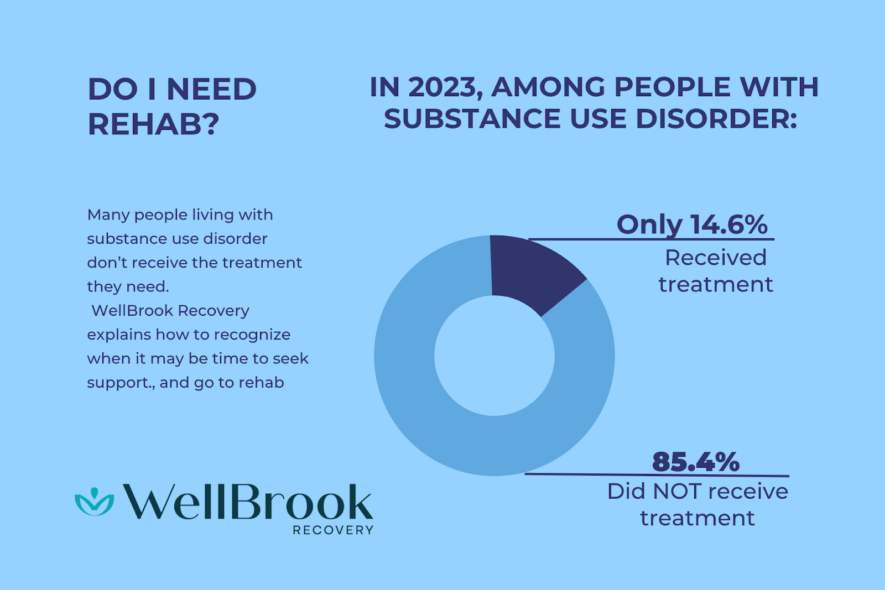
In 2023, 19.1% of people 12+ were classified as needing substance use treatment, but only 4.5% received the treatment.
Among people who had a substance use disorder, only 14.6% got treatment; 85.4% did not. Among everyone classified as needing treatment, 23.6% received it.
If you’re wondering when to go to drug or alcohol rehab, noticing these patterns early can help you get the support you need before things escalate.
Signs You Need to Go to Rehab

Below are clear, practical signs showing you need rehab. If several fit your situation, it is likely time to go to rehab.
You Prioritize Substance Use Over Other Activities
You skip family time, miss workouts or hobbies, and leave events early to use or to recover. Life shrinks around the substance.
You Meet Criteria for a SUD on the DSM-5
Clinicians use 11 criteria to diagnose a substance use disorder (SUD):
- Taking more than planned
- Trying and failing to cut backcraving
- Not meeting duties
- Using despite relationship problems
- Giving up activities
- Risky use
- Using despite health issues
- Tolerance,
- Withdrawal.
Meeting 2–3 is mild, 4–5 moderate, 6+ severe. You can read a plain-language checklist (adapted from APA) here: CDC DSM-5 criteria.
Withdrawal Symptoms and Tolerance Issues
You need more to get the same effect (tolerance). You feel shaky, sweaty, anxious, sick, or can’t sleep if you don’t use (withdrawal). These are signs of physical dependence and can be dangerous without medical care, especially with alcohol or benzodiazepines. Detox uses medication to manage withdrawal safely.
Financial Issues
Money keeps disappearing. You borrow, sell belongings, or miss bills because funds go to alcohol or drugs. Hidden costs pile up: delivery fees, rides, fines, medical visits, lost wages.
Relationship Issues
Trust fades, arguments repeat, you hide, use, or lie about it. Partners, parents, and friends pull back. Loved ones often spot the problem before we do.
Trouble at Work or School
Lateness, missed deadlines, lost focus, warnings, or suspensions. In some cases, job loss or dropping out. These are common early red flags.
Concern from Friends and Family
If people you trust say they’re worried, take it seriously. Outside eyes see patterns we want to ignore.
You Just Can’t Quit
You’ve tried white-knuckling it. You’ve promised yourself “never again.” You still go back. That’s not a weakness- It’s a medical condition that responds to real treatment. And treatment works best when it’s long enough and matched to your needs.
The Consequences of Avoiding Help
Ongoing use raises physical and mental health risks, including:
- Heart and liver problems
- Infections
- Overdose
- Anxiety
- Depression
Many people also face painful, even life-threatening withdrawal if they stop suddenly, especially with alcohol, opioids, and sedatives. Supervised care can reduce these risks.
Substance use also strains trust and stability, impacting relationships and careers. Family roles shift, kids notice. At work, performance drops; promotions stall. Treatment improves these outcomes, especially when it includes ongoing support.
The Role of Rehabilitation in Recovery
Rehabilitation provides a structured, supportive environment to safely address addiction and begin the journey toward lasting recovery. It focuses on healing the mind, body, and behaviors while preparing you for life after treatment.

What to Expect in a Rehab Program
Good programs start with an assessment: your health, substance history, mental health, goals, and risks. You may need a detox program first if withdrawal is unsafe.Based on your needs and circumstances, your care team will help decide whether inpatient rehab or outpatient treatment is the best fit. After that, care may include:
- Medical care and, when appropriate, medications (for alcohol and opioid use disorders, medications can be life-saving).
- Counseling (individual, group, and family).
Skills for cravings, triggers, sleep, stress, and relapse prevention. - Peer support groups to add community.
- Aftercare planning so you stay connected once you leave.
These are standard, evidence-based parts of treatment in the U.S.
Myths About Rehab
- Rehab means I lose control: You set goals with your team. You have a say in your plan.
- I can’t afford it: Many health plans must cover mental health and substance use services. Federal parity rules require comparable coverage to medical care. Marketplace plans list SUD services as essential health benefits. Check your insurance.
- Detox alone fixes it: Detox is only the start. Recovery outcomes improve with continued care and ongoing support.
Taking the First Step Toward Recovery

If you saw yourself in the signs above, that’s courage. You’re already making a change.
Wellbrook Recovery helps people in Wisconsin and Ohio with evidence-based care. If you’re asking, When should you go to rehab for alcohol?, the answer is now, especially if you’re seeing withdrawal, growing tolerance, repeated relapses, or harm to health, work, or relationships.
Take the first step today! Contact Wellbrook Recovery to speak with a caring specialist and start your path toward lasting recovery.
Frequently Asked Questions About Rehab

What can I expect during the first week of rehab?
Day one is intake and assessment. You’ll review your health, history, and goals with medical and counseling staff. If detox is needed, it often begins right away with medicines that ease withdrawal and keep you safe. You’ll get a daily schedule with therapy, education, and rest. Many people feel anxious the first days. That’s normal. Structure helps. So does meeting others who get it.
When is detox necessary?
Detox is needed when stopping could be dangerous or very uncomfortable without medical help. This is common with alcohol, benzodiazepines, and opioids. Medically supervised withdrawal uses medication and monitoring to lower the risk of seizures, delirium tremens, severe dehydration, and other complications. After detox, treatment continues with therapy and support.
Is it possible to overcome addiction without rehab?
Some people do stop on their own or with mutual-help groups, but outcomes are usually better with formal treatment, especially when it’s long enough and includes follow-up care. Many people need multiple rounds of care. That’s okay. This is how chronic conditions change.
Does insurance cover rehab?
Often, yes. Under federal law, many plans must cover mental health and substance use services on par with medical/surgical benefits. Marketplace plans include these services as essential health benefits. Coverage details still vary, so it’s smart to verify benefits and any pre-auth rules. We can help you check.
How long is drug and alcohol rehab?
There’s no one-size-fits-all answer. Many people do 30–90 days in residential or intensive outpatient care, then continue with outpatient services and support groups. Longer, steady care leads to better outcomes.