Quitting fentanyl is a major step that can be difficult. Though a life without fentanyl dependence has many benefits, getting there can be hard. Fentanyl withdrawal symptoms can often be challenging, causing resolve to falter. Wellbrook Recovery, experienced providers of rehab, explore management strategies and coping techniques to ease the withdrawal process and help you heal and recover effectively.
Table of Contents
- Key Takeaways on Fentanyl Withdrawal Symptoms
- What Is Fentanyl Withdrawal?
- What Are Fentanyl Withdrawal Symptoms?
- How Long Does Fentanyl Withdrawal Last?
- Which Factors Influence Fentanyl Withdrawal?
- How Is Fentanyl Withdrawal Treated?
- Detox Settings: Inpatient vs. Outpatient
- Long-Term Recovery After Fentanyl Withdrawal
Key Takeaways on Fentanyl Withdrawal Symptoms
- Fentanyl withdrawal symptoms often include physical effects like muscle aches, sweating, and nausea, alongside psychological symptoms such as anxiety, irritability, and insomnia.
- Withdrawal usually begins within hours after the last dose, peaks in the first few days, and may persist for one to two weeks or longer.
- Factors such as dosage, length of use, overall health, and co-occurring conditions can strongly influence the severity and duration of withdrawal.
- Withdrawal management strategies like medical detox, tapering, and supportive care provide safer, more effective ways to navigate symptoms.
- Simple coping techniques such as hydration, nutrition, mindfulness practices, and peer support can help reduce discomfort and stress.
- Certain medications, including buprenorphine, methadone, and naltrexone, are often used to ease withdrawal symptoms and cravings.
- Building long-term recovery strategies, such as therapy, relapse-prevention planning, and ongoing support systems, is essential for lasting freedom from fentanyl.
What Is Fentanyl Withdrawal?
Fentanyl withdrawal is the body’s reaction to losing a substance it has grown dependent on. Because fentanyl is an extremely potent synthetic opioid, it doesn’t just dull pain; it changes the way the brain regulates mood, sleep, and physical comfort. Over time, the body adjusts to functioning with fentanyl present.
When fentanyl use is reduced or stopped, the brain is suddenly without the chemical it has come to rely on. The balance it once maintained naturally has been outsourced to the drug. Withdrawal occurs when the artificial balance is disrupted. Because fentanyl is so strong, it doesn’t just leave behind discomfort; it leaves the brain and body unsteady, forcing them to relearn how to regulate pain, mood, and basic functions on their own.
What Are Fentanyl Withdrawal Symptoms?
Fentanyl withdrawal is the body’s reaction to life without a drug it has come to depend on. Because fentanyl alters both physical and mental functioning, symptoms appear everywhere, from the physical discomfort that makes it hard to sleep, to the psychological weight that makes it hard to hope.
Physical Symptoms of Fentanyl Withdrawal
Physical symptoms of fentanyl withdrawal can be overwhelming. They can include:
- muscle pain
- sweating and chills
- stomach upset with nausea
- diarrhea
- severe insomnia that prevents the body from getting needed rest.
These symptoms don’t unfold all at once. They usually begin within hours of the last dose, peak around one to three days, and can last over a week. But the severity varies: one person may feel only mild aches and sleeplessness, while another may experience symptoms so overwhelming that daily functioning becomes impossible.
Psychological Symptoms of Fentanyl Withdrawal
Alongside the physical discomfort, withdrawal also affects the mind. Common psychological symptoms include:
- anxiety
- depression
- irritability
- persistent cravings
These symptoms can strain relationships and make it harder to stay focused on recovery, which is why emotional support is so critical.
These psychological symptoms matter because they persist and are not fleeting. Even after the body starts to stabilize, the mental struggle often lingers, creating what’s sometimes called “post-acute withdrawal.” Recovery requires not only getting through the physical discomfort that withdrawal presents but also learning how to quiet the mind’s demands and build new ways of coping.
How Long Does Fentanyl Withdrawal Last?
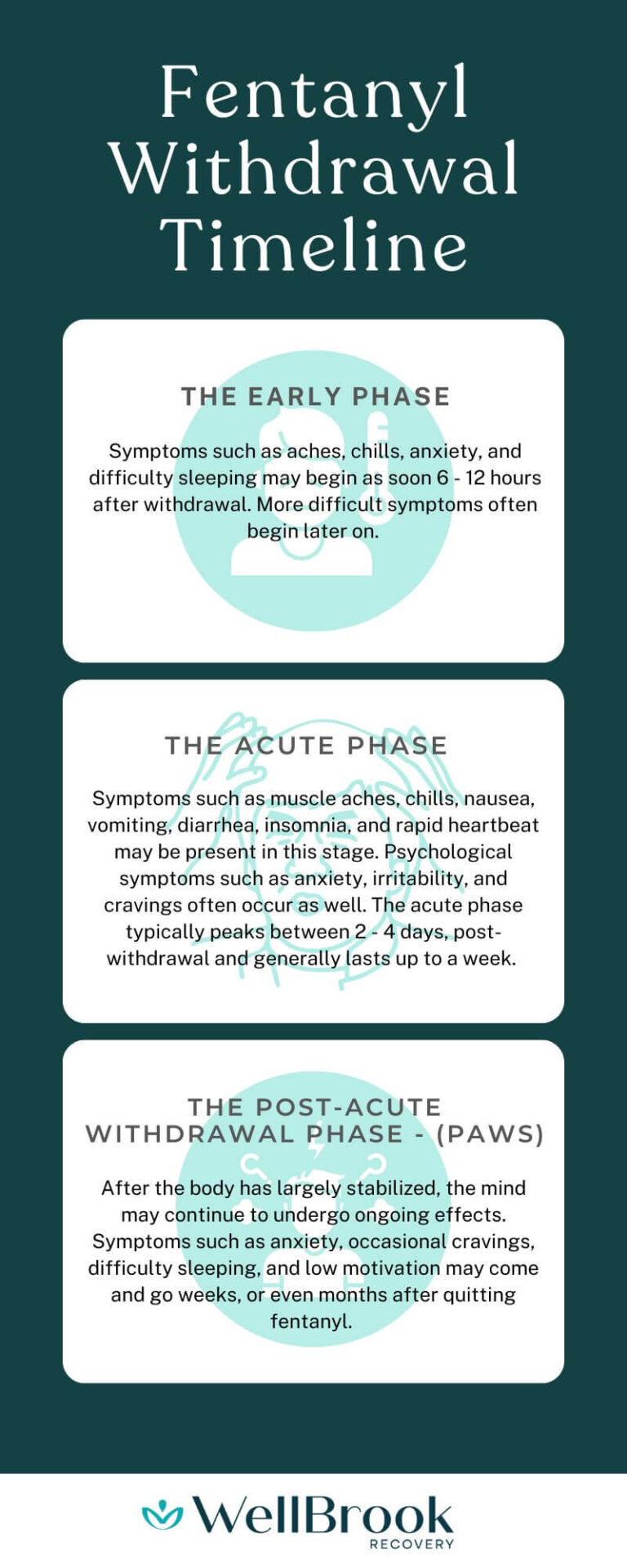
Fentanyl withdrawal is not a single moment, but a process, a gradual unraveling of the body and mind from the grip of a powerful opioid. Here, Wellbrook Recovery outlines the Fentanyl Withdrawal Timeline.
The Early Phase: Within 6 – 12 hours, symptoms such as aches and chills, anxiety, or difficulty sleeping may begin for some users.
The Acute Phase: The acute phase typically peaks between 2 and 4 days.
This stage brings a mix of physical discomfort, such as muscle aches, chills, sweating, nausea, vomiting, diarrhea, insomnia, and rapid heartbeat, alongside psychological strain, such as anxiety, irritability, and strong cravings. The body is adjusting to the absence of fentanyl, and the mind is working through the loss of a substance it has come to depend on.
For most, this phase lasts about a week, though the severity and duration of the fentanyl detox timeline vary based on factors like history of use, metabolism, and overall health.
The Post-Acute Withdrawal Phase (PAWS): After the body has largely stabilized, the mind may continue to experience ongoing effects. Weeks or even months after acute symptoms subside, post-acute withdrawal can include mood changes, anxiety, difficulty sleeping, low motivation, and occasional cravings. These symptoms may come and go, sometimes appearing more intensely without an obvious trigger.
PAWS reflects how fentanyl affects the brain as well as the body, making recovery a gradual process that involves both physical and mental adjustment.
Which Factors Influence Fentanyl Withdrawal?
The intensity and duration of fentanyl withdrawal depend on a mix of biological and behavioral factors.
Dosage and Duration: The more a body has relied on fentanyl over time, the bigger the readjustment when the drug is gone. Long-term, high-dose use often brings stronger physical symptoms and a more persistent mental craving.
Patterns of Use: How someone uses fentanyl matters just as much as how much. Frequent or near-constant use can make the body’s dependency tighter, whereas intermittent use might result in a withdrawal experience that ebbs and flows more unpredictably.
Individual Physiology: Each body reacts differently. Factors such as metabolism, BMI, and underlying medical conditions influence how quickly the system can recalibrate and how severe the symptoms appear.
Mental and Emotional Landscape: Psychological state shapes withdrawal in subtle but powerful ways. Anxiety, depression, or chronic stress can intensify emotional symptoms, while resilience, coping habits, and available support can soften the blow.
How Is Fentanyl Withdrawal Treated?
Effective fentanyl withdrawal treatment requires addressing both the immediate symptoms and the underlying dependence, using a combination of medical oversight, supportive care, and individualized strategies.
Medical Approaches: Medications for Fentanyl Withdrawal
Certain medications can ease the intensity of withdrawal and reduce the risk of relapse.
- Methadone: Methadone is a long-acting opioid that can gradually take the place of fentanyl in the body. This can help ease both cravings and physical withdrawal symptoms. Because it is still an opioid, methadone must be taken under careful medical supervision to avoid creating a new dependence.
- Buprenorphine: Often combined with another medication called naloxone, buprenorphine works by reducing cravings and making withdrawal symptoms less intense. It carries a lower risk of overdose compared with medications like methadone.
- Naltrexone: Naltrexone blocks the effects of opioids like fentanyl, so the drug no longer produces a “high.” It is usually started after the most intense withdrawal symptoms have passed and can help support long-term recovery.
Using these medications under professional guidance can make the withdrawal process safer and more manageable, giving the body and mind a better chance to recover fully.
Coping Strategies for Withdrawal: What Can I Do to Help With Fentanyl Withdrawal?
Withdrawal can feel exhausting, but there are ways to make the process more manageable and give yourself some stability along the way.
Stay Connected: Keep in touch with people who understand or support you. A quick call, text, or even checking in with a peer group can help you feel less alone and remind you that you’re not facing this by yourself.
Shape Your Space: Small changes to your environment can make a big difference. Clear clutter, soften the lighting, grab a cozy blanket, or set up quiet distractions, anything that makes your surroundings feel calmer and easier to handle.
Focus on One Thing at a Time: Withdrawal can make even simple tasks feel daunting. Break your day into small, doable steps, and give yourself credit for each one you complete.
Use Gentle Relaxation Tools: Breathing exercises, light stretching, short meditation sessions, or even a brief walk can help ease tension and irritability, and give your mind a break from constant cravings.
Fuel Your Body: Even if you don’t feel hungry, try to keep hydrated and eat small, balanced meals. Broths, teas, and electrolyte drinks can help with nausea and fatigue.
Keep Track: Jot down symptoms, mood changes, or small wins. Seeing patterns and progress, even if they are gradual, can help you stay grounded and adjust your strategies as needed.
Reach Out for Help: If anything feels overwhelming or out of control, contact a healthcare professional. Professional guidance can keep you safe and help you move forward with confidence.
Detox Settings: Inpatient vs. Outpatient
Choosing the right detox setting is an essential step in managing fentanyl withdrawal safely and effectively. The level of supervision, structure, and support of a rehab program can make a significant difference in both comfort and outcomes.
Inpatient Detox: Inpatient programs provide 24/7 medical supervision, structured routines, and immediate support for severe withdrawal symptoms. This setting is ideal for heavy users or individuals with co-occurring health conditions that require close monitoring.
Outpatient Detox: Outpatient programs allow patients to remain at home while attending scheduled medical visits. This approach may be suitable for individuals with milder dependencies or strong support systems, but it requires self-discipline and reliable oversight.
Professional Monitoring: Regardless of the setting, professional oversight is essential. Fentanyl withdrawal can be unpredictable, and even experienced patients benefit from structured care, expert guidance, and a clear plan for transitioning into long-term recovery.
Long-Term Recovery After Fentanyl Withdrawal
Recovery doesn’t end once the acute withdrawal symptoms pass. Long-term strategies are essential for maintaining stability, rebuilding routines, and reducing the risk of relapse.
Ongoing Therapy: Continuing therapy, whether individual counseling, cognitive-behavioral therapy (CBT), or other evidence-based approaches, helps address the underlying triggers and thought patterns that contributed to dependence. Therapy can also provide tools for managing stress, cravings, and emotional challenges that persist after withdrawal.
Support Networks: Staying connected with peer support groups, sober communities, or recovery mentors can provide accountability, encouragement, and a sense of belonging. These networks are valuable for navigating difficult moments and celebrating milestones along the way.
Lifestyle Adjustments: Adopting routines that promote physical and mental well-being can strengthen recovery. Regular exercise, balanced nutrition, adequate sleep, and structured daily schedules support both body and mind. Mindfulness practices, hobbies, and creative outlets can help fill the space once occupied by substance use.
Relapse Prevention Strategies: Learning to recognize triggers, developing coping mechanisms for cravings, and having a clear plan for moments of temptation are all essential. Long-term recovery is rarely linear, so flexibility, self-awareness, and patience are key.
Professional Check-Ins: Periodic follow-ups with healthcare providers can help monitor physical health, adjust treatment plans, and provide guidance as new challenges arise.
Recovery is a gradual, ongoing process. Combining therapy, support, healthy routines, and professional guidance gives the best chance of sustaining progress and building a stable, fulfilling life beyond fentanyl dependence.
Manage Fentanyl Withdrawal Symptoms With Wellbrook Recovery
Fentanyl withdrawal is a complex process that affects both the body and mind. Understanding what to expect, from the acute symptoms to the lingering post-acute effects, and knowing the strategies, medications, and supportive care options available can make recovery more manageable.
No one should navigate this journey alone. Professional guidance, therapy, and supportive networks are essential for both safety and long-term success. If you or someone you know is facing fentanyl withdrawal, reach out to WellBrook Recovery for expert support, personalized guidance, and a structured path toward lasting recovery.
FAQs on Fentanyl Withdrawal Symptoms
How long does it take to detox from fentanyl?
Detox from fentanyl usually takes 7 to 10 days, with withdrawal symptoms starting within 12 hours of the last dose. Symptoms peak between days 2 and 4 and gradually decline by day 7. Factors such as dosage, length of use, and individual health can extend detox to several weeks.
How can I help someone withdrawing from fentanyl?
Help someone withdrawing from fentanyl by encouraging medical supervision, ensuring hydration, and providing a calm environment. Support them with non-judgmental care, monitor vital signs, and encourage rest. Medications like buprenorphine or methadone prescribed by doctors can reduce withdrawal severity and increase safety during the detox process.
Can you quit fentanyl cold turkey?
You can quit fentanyl cold turkey, but it is extremely dangerous due to severe withdrawal symptoms and high relapse risk. Cold turkey withdrawal causes intense cravings, vomiting, insomnia, and anxiety. Doctors recommend supervised detox with medications like buprenorphine or methadone to manage symptoms and increase safety..
Can you die from fentanyl withdrawal?
Fentanyl withdrawal is rarely directly fatal, but it can lead to life-threatening complications such as severe dehydration, electrolyte imbalance, or underlying health issues. The intense cravings and distress also increase the risk of relapse and overdose. Medical supervision significantly reduces these risks during withdrawal.
Does suboxone help with fentanyl withdrawals?
Suboxone helps with fentanyl withdrawals by reducing cravings, easing pain, and controlling symptoms like nausea, anxiety, and insomnia. It contains buprenorphine, which partially activates opioid receptors, and naloxone, which prevents misuse. Under medical supervision, Suboxone makes withdrawal safer and increases the chance of long-term recovery.
Can fentanyl withdrawal cause seizures?
Fentanyl withdrawal rarely causes seizures, but seizures can occur in people with underlying medical conditions or polysubstance use. Common withdrawal symptoms include muscle aches, nausea, insomnia, and anxiety. Seizures are more typical with alcohol or benzodiazepine withdrawal, but medical supervision is still advised for fentanyl detox.
Does kratom help with fentanyl withdrawal?
Kratom may reduce fentanyl withdrawal symptoms such as anxiety, insomnia, and cravings, but it is not FDA-approved and carries risks of dependence and side effects. Evidence is mostly anecdotal, and medical treatments like Suboxone or methadone are safer and more effective options for managing fentanyl withdrawal.