Key Takeaways: How Long Is Rehab?
- Rehab isn’t one-size-fits-all — the right length depends on the substance, severity of addiction, and personal goals.
- Short programs help establish structure, safe detox, and basic coping skills.
- Mid-length programs provide more time to build stronger routines and relapse-prevention strategies.
- Lengthier programs focus on deep healing, emotional triggers, and long-term recovery habits.
- Extended programs offer added support, life skills, and resilience for those needing more time.
- Wellbrook Recovery’s alcohol and drug rehab provides tailored program lengths to give you the best chance at lasting sobriety.
Choosing a rehab program is a meaningful step in your journey, but committing blindly without knowing how it will support your needs will affect your outcomes. At Wellbrook Recovery, we’re here to support you with understanding and guidance, helping you explore the different program options and what each can offer. Knowing your choices can give you the confidence to take the next step toward lasting healing and recovery.
How Long Are Drug and Alcohol Rehab Programs?
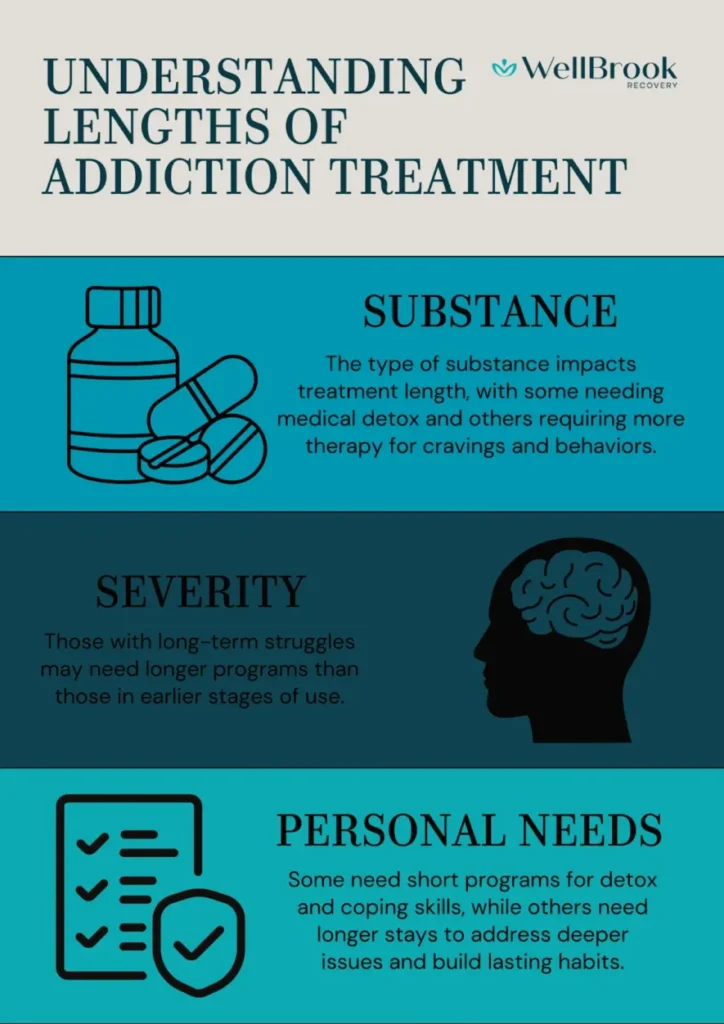
Maybe you’re wondering ”How long does rehab last?”. Honestly, there isn’t a simple answer. Rehab isn’t a one-size-fits-all process. The length of a rehab program can depend on a few things:
- Type of substance: The substance you use dictates the length of stay you’ll need. Different substances affect the body and mind in different ways. For example, alcohol and opioids require medical detox, while stimulants like cocaine or meth don’t need as long a physical detox but need more therapy to address the reasons and behavior patterns that lead to addiction.
- Severity of the addiction: If you’ve been struggling for years you’ll need a longer program than someone in the earlier stages of substance use.
- Your needs and goals: Some people benefit from shorter, structured programs that help them safely detox and learn coping skills. Others need longer stays that give more time to work through underlying issues that led to the addiction in the first place and build lasting habits for successful recovery.
Remember, it’s not just about the days you spend in a facility — it’s about the support, tools, and guidance you receive from the staff and your loved ones that help you stay healthy and drug-free. Find a program that feels right for you, that is the most important thing, that you are comfortable there, because that gives the best chance for a lasting recovery.
Short-Term Rehab Starts the Momentum of Recovery
In a shorter program you get a structured, supportive environment where you can detox safely and begin therapy. In this shorter program, the focus is on helping you build daily routines, such as consistent sleep schedules, regular meal times, attending therapy sessions, and practicing coping skills.
A short program is often Partial Hospitalization Programs (PHP) and short-term inpatient rehab programs. The goal is to create for yourself a stable rhythm and provide you tools to help you get your life to where you want it.
What a Mid-Length Rehab Program Provides for You
A moderate-term program provides you with more time to go deeper into recovery. You’ll not only maintain the basic structure from a short term program, but also incorporate more advanced habits, such as stress management techniques, planning for social or work situations, and learning relapse-prevention strategies.
A mid-length stay is common for Intensive Outpatient Programs (IOP), extended Partial Hospitalization Programs (PHP), and standard inpatient rehabilitation programs.This extra time helps you turn short-term changes into lasting habits.
Reaching Deeper Healing with a Longer Rehab Stay
In a longer term program with more time of structured care, you will address the emotional triggers that lead to addiction and relapse, gain relapse-prevention skills, and practice putting recovery into action in your everyday life.
This extended time makes healthy habits stick, giving you the confidence you need as you transition back to life outside the program. A lengthier program is typical for long-term inpatient rehab and residential treatment.
Advantages of Extended Rehab Programs
If you need extra support or help to sustain lasting recovery, extended rehabilitation programs are designed for you. You’ll have intensive therapy, life skills training, and long-term guidance from staff specializing in substance abuse. By spending more time in a structured environment, you can strengthen your recovery habits, build resilience, and get more prepared to handle life after leaving rehab.
Take the Next Step in the Road to Recovery
If you’re tired of the cycle of addiction and want to be drug free, we will guide you through every step. At Wellbrook Recovery we consider every aspect of your addiction journey to help you choose the rehab program that lasts for the duration of time you need to successfully overcome your addiction and build healthy, lasting recovery. Contact us today to see how we can help you.
Frequently Asked Questions: How Long is Drug and Alcohol Rehab?
How long are detox programs?
At Wellbrook Recovery, detox program typically lasts 4 to 7 days, but the exact length depends on the substance involved, how severe the addiction is, and the person’s overall health. For example, alcohol detox and opioid detox often require a longer, medically supervised process to safely manage withdrawal symptoms, while stimulants may involve a shorter physical detox but still require follow-up treatment.
What happens during the first few days of rehab?
The first few days usually involve an intake and assessment process. The team reviews your medical history, substance use, and mental health to create a personalized treatment plan. If needed, you’ll go through a safe, supervised detox to manage withdrawal symptoms before starting therapy and other recovery programs.
Do I need to be addicted for a certain amount of time to go to rehab?
No. Rehab is designed for anyone struggling with substance use, whether it’s been weeks, months, or years. The important thing is getting help when you need it, no matter how long the problem has been going on.
Will I have to go through detox before therapy?
It depends on the substance and your individual needs. Some substances, like alcohol or opioids, often require a medically supervised detox first. Others may allow you to start therapy right away while tapering off the substance safely. The treatment team will guide you through the best approach.
How long are drug rehab programs?
The length of drug rehab programs can vary depending on individual needs, the type of substance, and the level of care required. Inpatient or residential rehab programs typically progress from short- to extended-term stays, offering more time and support for those with severe or long-standing addictions. Outpatient programs provide greater flexibility, lasting anywhere from a few weeks to several months, depending on the individual’s needs and session frequency.
What happens after I finish rehab?
Recovery doesn’t end when you leave the program. Aftercare plans often include follow-up therapy, outpatient support groups, and strategies to prevent relapse. The goal is to help you transition smoothly back to daily life while maintaining the habits and skills you developed in rehab.
Can I work or go to school while in a rehab program?
That depends on the type of program you choose. Inpatient programs require you to live at the facility full-time, so work or school isn’t possible during treatment. Outpatient programs, on the other hand, let you attend therapy sessions while continuing work, school, or other daily responsibilities.