If you’re confused about what Ohio’s kratom laws are, you’re not alone. The past year has seen fiery debates between the governor, state legislators, and Ohio residents about what kratom and 7-OH’s legal status should be.
The current legal status of kratom and 7-OH in Ohio
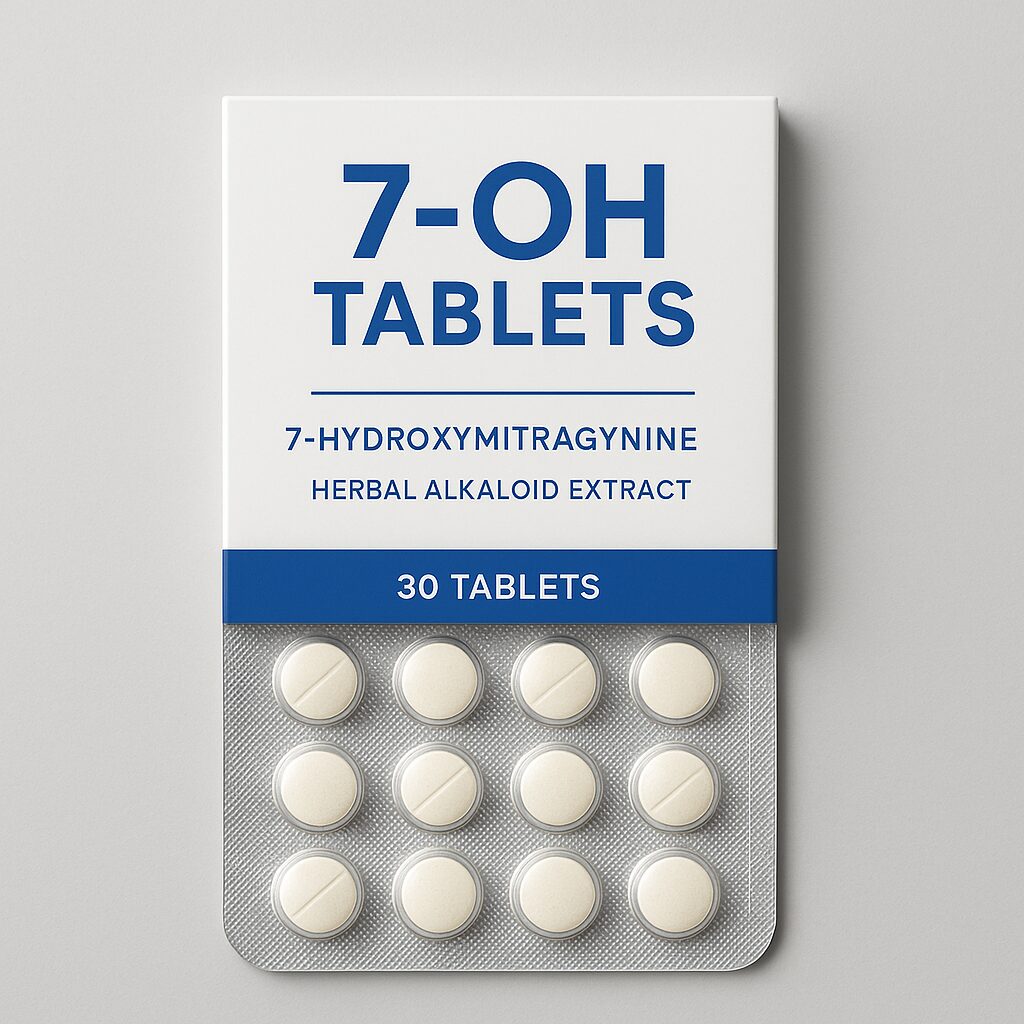
As of May 2026, synthetic forms of kratom, including 7-OH are permanently banned in Ohio as Schedule I drugs. Natural kratom remains legal for now but is under scrutiny by both the state legislature and the Ohio Pharmacy Board. The state legislators would to like to see heavy kratom regulations in place, while the pharmacy board is considering a complete ban on kratom products.
Ohio now distinguishes natural kratom from its synthetic and concentrated derivatives. Several forms moved to Schedule I in May 2026.

How Ohio’s Kratom ban came to be
Governor DeWine’s call for a complete ban on kratom
On August 25, 2025, Governor Mike DeWine called upon the Ohio Board of Pharmacy to immediately designate all natural and synthetic kratom compounds as illegal drugs.
DeWine argued that “These modified kratom products, sold online and in stores, are essentially legal, over-the-counter opiates that anyone – including kids – can buy with just a few bucks” He also cited numerous deaths in the state caused by the product, reports of newborns with neonatal opioid withdrawal syndrome at birth, and a rising number of calls to the poison control centers regarding kratom.
This complete ban on all kratom derivatives, current and future, would have been the strictest in the nation. Today, with the emergence of new kratom related products like MGM-15, which is sold legally as a kratom product but acts like an opioid, we see that the governor may have been right.
The Feds get involved in Ohio governors decision to schedule kratom
The Ohio Board of Pharmacy initially scheduled an emergency meeting for August 27 to consider the governor’s request.
Just before the meeting was scheduled to begin, Governor DeWine himself cancelled the meeting, following a conversation with Health and Human Services Secretary Robert F. Kennedy Jr. DeWine’s spokesman told The Statehouse News Bureau that the governor “still intends to request a Kratom ban, and the pause was in part to allow for conversation with the FDA per the Secretary.”
Senator Blessings introduces a bill to regulate kratom and ban 7-OH
On Oct 21 2025, State Senator Louis W. Blessing III, (R- Colerain Township) introduced Senate Bill 299 , a more targeted alternative to kratom regulation, as opposed to the governor’s proposed full ban.
“I don’t think this is something that would put us at odds with the administration,” Sen. Blessing said. “I think this is something that they would like to see.”
Blessing’s bill would specifically have banned 7-OH products, while allowing the sale of natural kratom leaf and powder. He argued that the state should target the dangerous synthetic forms rather than criminalizing consumers who use natural kratom responsibly. His proposal mirrors the Kratom Consumer Protection Acts (KCPAs) already adopted in some states. In Utah, Florida, and Georgia, 7-OH products are banned while natural kratom is legal, yet regulated.
Another bill to regulate kratom is introduced in the House
On Nov. 12, 2025, two state representatives, Mike Odioso and Brian Lorenz introduced bill HB 587. The bill, similarly to Senator Blessings bill, aims to regulate Kratom through age restrictions, product testing, labeling requirements, and manufacturer registration. The bill would also ban all forms of 7-OH and would highly restrict concentrated extracts.
What Ohio residents had to say about the proposed kratom and 7-OH ban
A passionate voice against kratom is Columbus mother Jennifer Young, who said that natural kratom led to the deadly seizure of her son, Johnny. His autopsy report listed fatal levels of the kratom compound mitragynine.
In an article on News 5 Cleveland, a 22-year-old Kratom user from Cleveland, warns that “It’s a tease.” She said she became addicted to Kratom after she got clean from heroin. “I think it’s a big way to relapse.”
In another item on WSYX ABC 6 news, a Colombus woman blames 7-OH for her husband’s death. “He wasn’t out seeking to get hard core narcotics… He just wanted something to give him energy, give him a mood booster… he admitted he was “duped” by the pills he thought would give him an energy boost.”
Gov Dewine signs executive order to ban kratom
On Friday, December 12th, Governor Dewine signed an executive order making all forms of synthetic kratom illegal in the state. This includes the derivative 7-OH. The ban on synthetic kratom was set to last 180 days.
Before the order expired, the Ohio legislature moved to make the ban permanent In April, 2026, the bill cleared the JCARR (Joint Committee on Agency Rule Review ), and on May 19, 2026 the bill became law.
All forms of synthetic kratom are now illegal in the state, while natural kratom remains legal.
However, The Ohio Board Of Pharmacy is considering extending the ban to include natural kratom too.
What happened to the proposed kratom regulation bills?
Senator Louis Blessing’s proposed kratom bill ultimately stalled in committee and expired without becoming law.
The second bill, HB 587, is still active and can potentially become law. Lawmakers are under pressure to get this bill to pass, before The Ohio Borad Of Pharmacy enacts a complete ban on natural kratom.
The restrictions currently in place are essentially a modified version of the emergency executive order DeWine first called for in August 2025.
Why Ohio’s decision on kratom matters nationally
Kratom and 7-OH use is not just Ohio’s issue, it’s a national problem. In nearly every state, and on a federal level, lawmakers are debating the best way to handle the issue.
If Ohio can successfully ban the more potent 7-OH, while keeping natural Kratom products safe and accessible, this can set a precedent for other states, and the national government to follow.
Mac Haddow, Senior Fellow on Public Policy of the American Kratom Association said “By focusing on removing dangerous synthetics while regulating natural kratom responsibly, Ohio can set a strong example for other states to follow.”
FAQs
Yes. As of May 2026, natural kratom remains legal in Ohio. However, its legal status is not guaranteed — the Ohio Board of Pharmacy is actively considering extending the current ban to include natural kratom, and HB 587, a bill to heavily regulate kratom, is pending in the state legislature.
No. All forms of 7-hydroxymitragynine (7-OH), including concentrated kratom extracts, are permanently banned in Ohio as Schedule I controlled substances as of May 19, 2026.
All synthetic forms of kratom and any concentrated kratom extracts containing 7-OH are banned. Natural kratom leaf and powder remain legal.
Yes, natural kratom products can still be legally purchased in Ohio. Products containing synthetic kratom or 7-OH cannot be sold or possessed legally in the state.
It is possible. The Ohio Board of Pharmacy is considering a complete ban on all kratom products, and HB 587, currently pending in the legislature, would impose significant restrictions on natural kratom including age limits, labeling requirements, and product testing standards.
Are you ready to be given a new chance at health and happiness? Be your true best self? Has going it alone not been working? Perhaps you’re concerned about a loved one and want to support them in obtaining the help they need to get better?
Wellbrook Recovery has extensive experience and expertise assisting individuals with all types of substance abuse struggles. Providing compassionate and cutting-edge, multi-pronged addiction recovery care at our beautiful, upscale facilities.
Our highly regarded, expert team of multi-licensed therapists and specialists will make your success their own and will hold your hand throughout, regardless of where you currently at. We’ve done it hundreds of times, helping individuals and families reclaim their lives, their confidence, and their smiles.
Just reach out.
We’ll walk you through the simple admission process and answer any and all questions.
We understand that addiction affects everyone differently, which is why we offer a range of treatment options designed to meet your individual needs. Our treatment center provides the following programs:
Drug & Alcohol Detox: Detoxification is often the first step in recovery. Our facility provides medically supervised detox to help clients safely manage withdrawal from drugs or alcohol in a supportive environment.
Inpatient Drug Rehab: Inpatient treatment offers a structured environment so clients can focus on recovery free from distractions. It’s ideal for those at the beginning of their recovery journey who need intensive, around-the-clock care to overcome addiction.
Day rehab – Partial Hospitalization Program (PHP): As clients transition from inpatient care to a more independent lifestyle, PHP gives them the support they need as they continue on their road to recovery. By spending much of the day in rehab but the evenings at home, clients reinforce the life and recovery skills they learned during inpatient treatment.
Outpatient Treatment Programs (Day/Evening): For those who need more flexibility, outpatient programs allow clients to continue living at home while attending treatment on a part-time basis.
Wellbrook Recovery believes in treating the whole person, not just the addiction. Our services go beyond detox and inpatient care to ensure a complete recovery process:
- Mental Health Support: Addiction often co-occurs with mental health disorders such as anxiety, depression, trauma and PTSD. Our team of mental health professionals works closely with clients to treat both the addiction and any underlying mental health issues.
- Behavioral Therapy: We utilize proven behavioral therapies such as CBT, DBT, IFS, EMDR, Biofeedback, Music Therapy, Art Therapy, among other advanced therapies to help individuals address the root causes of addiction, develop coping skills, and make lasting changes in their lives.
- Support Groups: Our support groups provide individuals with the opportunity to connect with others who are going through similar struggles. Peer support is an essential part of the recovery journey.
- Family Programs: Addiction impacts not only the individual but also their loved ones. Our family programs educate and support families, helping them to rebuild relationships and provide ongoing support.
- Alumni & Aftercare: We have a network of our close-knit alumni community, with events and support to stay in touch with your recovery and “battle brothers & sisters” from your time in treatment.