Each year, 80,000 Americans die from drug overdoses. 178,000 die from excessive alcohol. A staggering 480,000 die from nicotine related illnesses. Yet medications to treat substance use disorders remain limited, under-utilized, and few and far between.
Now, emerging evidence and research suggest something new. GLP-1 drugs, developed for diabetes and also used for weight loss, seem to be working to treat addiction, and not just one specific substance, but rather, can target multiple substances addictions at a time. Could this be the breakthrough in addiction treatment that we’ve been waiting for?
What Are GLP-1 Drugs?
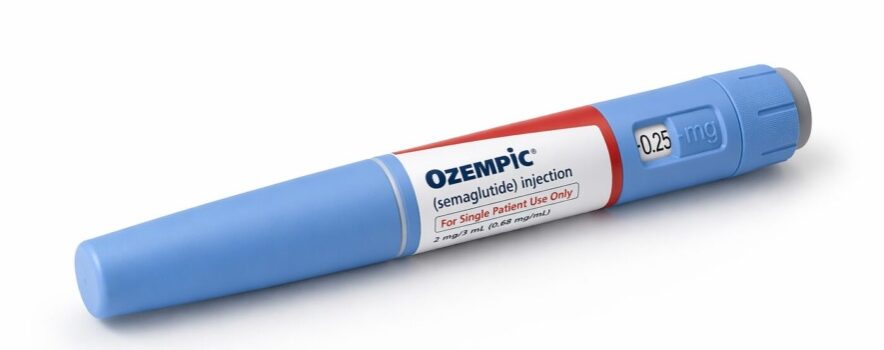
GLP-1 drugs, best known by brand names like Ozempic and Wegovy (semaglutide), and Mounjaro (tirzepatide), are a class of drugs originally developed to manage blood sugar levels in those with diabetes. It was soon discovered to be an appetite suppressant, aiding in weight loss. The drug quickly rose in popularity, becoming a long-sought solution for those struggling with obesity.
How do GLP-1 medications work?
GLP-1 drugs work by mimicking a natural hormone in the body called GLP-1. The hormone is produced in the small intestines and regulates blood sugar and appetite.
Notably, it slows the stomach from emptying, leading to feeling full for longer, and it increases how full you feel after eating by affecting the part of the brain that processes feelings of hunger.
GLP-1 drugs reduce ‘food noise’
What’s fascinating about GLP-1 drugs, and what differentiates them from other weight loss solutions, is that besides for suppressing appetite, they reduce “food noise” in the brain. Users report that food simply doesn’t hold the same grip over them that it used to. They can eat and then simply move on with life, without being obsessed with what and when and how they will eat next.
How GLP-1 drugs could work for addiction
To understand how GLP-1 drugs might help for addiction, its first essential to understand how addiction works in the brain.
How addiction works in the brain
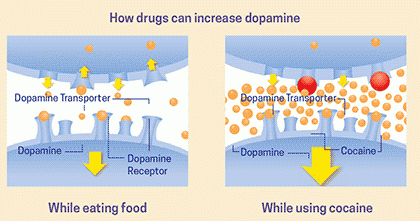
The brains reward system works with dopamine releases. You do something pleasurable; the brain releases dopamine, which are basically feel-good, happy hormones. That makes you want to do the activity again, to experience the pleasurable feeling again.
What happens with addiction is that certain substances trigger an outsized flood of dopamine, far more than any natural pleasure can produce. Naturally, the person begins to crave that substance that provided that huge amount of pleasure.
However, with chronic use of a substance, the brain becomes less sensitive to dopamine, and increasingly larger amounts of dopamine are needed to experience the same pleasure. Yup, that means that more and more of a substance needs to be ingested in order to receive the same amount of pleasure, and soon the person needs to ingest insane quantities of whatever he is addicted to just to maintain a baseline level of feeling good.
Because addiction affects the brain in such a severe way, scientists realized that addiction is a lot more than just a lack of willpower but rather is a debilitating, chronic disease, which needs to be treated with real medications. Enter GLP-1 drugs.
How do GLP-1 drugs work on the addicted brain?
Glp-1 drugs act directly on the brain. In the same way that GLP -1 drugs act on the part of the brain that controls appetite, so too can they act on the part of the brain that controls desire.
Researchers explain that it acts on the reward mechanism in the brain and dampens the dopamine response to these addictive substances. In some cases, users report that the substance loses its pleasurable appeal, without even trying, simply because the brain isn’t responding to these stimuli the way it normally would.
The uniqueness of using GLP-1 drugs to treat addiction
GLP-1 drugs have many unique qualities that differentiate them from standard medication used to treat addiction.
GLP-1 drugs work for many substances at once
The beauty of GLP -1 drugs is that they don’t just address one issue- it can potentially reduce cravings for many substances simultaneously. It’s like shutting the water main in the house instead of a faucet. GLP-1 drugs address the core of addiction, the need for massive amounts of dopamine, instead of targeting just one specific substance.
“Essentially all addiction medications to date have been specific to a particular type of addiction,” Heath D. Schmidt, a neuroscientist at the University of Pennsylvania, told the New Yorker. “GLP-1s might be telling us that there’s some kind of universal pathology when it comes to addiction. And that they’re part of how we fix it.”
GLP-1 drugs for addiction quiet the noise in the brain
Users describe it as “quieting” the addiction noise in their brain. One user told the New Yorker; “People talk about Ozempic getting rid of food noise, for me, it took out alcohol noise.”
Researchers and scientists see it as the brain’s dopamine (reward) system starting to work again the way it’s supposed to, potentially reducing the exaggerated dopamine responses linked to addictive behavior.
With GLP-1 drugs for addiction treatment, its evidence first, research second
New drugs have a process they tend to follow. Idea. Research. Clinical trials. Evidence. Grants. Animal studies. Human studies. FDA approval. Its a tedious process that hopefully, but often not, leads to something.
With GLP-1 drugs, the process is working in reverse. It started with anecdotal evidence. Reports of GLP-1 users that were using it for diabetes or obesity suddenly losing interest in alcohol, drugs or nicotine.
Now scientists are working in reverse and trying to figure out- why? How? Is Ozempic the answer to the addiction crisis in our nation? Is this the breakthrough drug treatment the world has been waiting for?
Ziyad Al-Aly, Clinical Epidemiologist at Washington University in St. Louis, writes in The Conversation “the most promising lead in addiction in decades will have come not from a deliberate search but from patients reporting a benefit no one anticipated.”
Some side benefits of GLP-1 for addiction
GLP-1 drugs have some side benefits that, while not targeting the addiction directly, can greatly assist in recovering from SUDs, especially for those that struggle with their moods along with SUD.
GLP-1 drugs can stabilize sugar levels
A potential, huge benefit of GLP-1 drugs is that it improves insulin secretion and stabilizes blood sugar. When blood sugar spikes up and down, mood often spikes up and down along with it. So with stable blood sugar levels, ones mood is often stabilized. Recovering from a SUD can be so much simpler when the medication one takes for it is also targeting mood.
Reduced symptoms of depression and anxiety
Besides for just stabilizing the mood through stable blood sugar levels, GLP-1 drugs have potential to treat clinical psychiatric disorders. A study on Psychiatry Online finds that the drug may improve mood symptoms in individuals with depression and anxiety. Being that many individuals struggling with substance abuse suffer from co-occurring mental health disorders, the potential to treat mental health and addiction at in one shot (no pun intended) can be a life saver for them.
Current research on weight loss drugs for addiction.
While anecdotal evidence abounds, empirical data and real research on the subject is emerging but still limited. Here are two studies:
The Veterans Affairs data
A major study comes from a massive analysis of over 600,000 U.S. veterans with type 2 diabetes, using data from the VA system. Researchers found that people taking GLP-1 drugs had a lower risk of developing addiction across multiple substances—including alcohol, nicotine, opioids, and cocaine—and in some cases, the risk was reduced by up to 25%.
Even more striking, among people who already had addiction issues, GLP-1 use was linked to a 40% reduction in drug overdoses, fewer hospital visits, and about a 50% reduction in drug- related death over three years.
As incredible as this data is, it is only an observational study culled from a large pool of data of one specific demographic, namely adult males. More research is needed to establish the data as fact.
Randomized clinical trial (JAMA Psychiatry)
In a randomized trial of people with alcohol use disorder, those taking the drug reported lower cravings and showed some reductions in drinking compared to a placebo. By the end of the trial, 40% of those on semaglutide reported no heavy drinking days at all, compared to just 20% in the placebo group
Some even had reduced cigarette use, again pointing to GLP-1’s cross-addiction potential.
Notably, these were participants who weren’t even trying to quit drinking — making the results all the more striking.
(alcohol, nicotine, opioids, cocaine) Up to 25% Mortality reduction *
(existing addiction, over 3 years) Up to 50% No heavy drinking days reported **
(JAMA randomised trial) 40% 20% 0% 10% 20% 30% 40% 50% 60% 70%
Risks and side effects of GLP-1 for addiction
Side effects of GLP-1 drugs for addiction
Like any medication, GLP-1 drugs come with side effects to be aware of:
- Nausea, vomiting, diarrhea, and constipation — most of which ease as the body adjusts
- Bloating, fatigue, and headaches
- Rare but more serious risks include pancreatitis, gallbladder disease, and kidney injury
The potentially dangerous period of GLP-1 initiation
The initiation period for GLP-1 drugs is hard. Nausea, fatigue, dehydration, reduced appetite, and blood sugar fluctuations are all common during the initiation phase, or when dosage is upped. As the physical side effects of GLP-1 initiation kick in, and the effects were waiting for – the reduced drug cravings, may not have arrived yet, the patient may be feeling off physically. For those struggling with SUD, this can be a trigger to – you got it- more using. Such treatments must be done under the care and close supervision of licensed professionals.
Loss of motivation- the side effect of dopamine changes in the brain
Researchers argue that if you go and mess with the brain’s dopamine lsysytem, you run the risk of lowering motivation levels across the board. Users report “being emotionally dulled.” The New Yorker magazine quotes a user saying “I wasn’t enjoying my family at all, or myself, or my life”
Researchers must be aware of this caveat- will tampering with the reward system in the brain mess with the motivation and reward system that drives the human condition?
Jens Juul Holst, Professor of Medical Physiology at the University of Copenhagen and one of the scientists credited with discovering GLP-1, worries that GLP-1 medications would make life “so miserably boring that you can’t stand it any longer and you have to go back to your old life.”
GLP-1 today- can I get it prescribed for SUD treatment?
Using Ozempic and its counterparts to treat SUD is still an emerging field. Evidence for its use is still largely anecdotal, and there isn’t yet enough empirical data backing it up. Therefore, it isn’t currently approved by the FDA for treating substance use disorders.
Doctors can prescribe its use off label, meaning for something it wasn’t intended for, but insurance won’t cover it. Thus, more research is needed to establish the effectiveness of these drugs for addiction treatment and allow them to be prescribed by doctors, removing one of the biggest barriers to treatment- finances.
Bottom Line-
Today, GLP-1 drugs are one of the most promising new frontiers in addiction treatment. The ability to not just target a specific addiction, but rather to address the core of the issue is a potential game changer in the field of addiction medication.
“We’re not just talking about a promising treatment; we’re looking at a potential turning point in addiction psychiatry and public health.” said Carolina Haass-Koffler, associate professor of psychiatry, human behavior and of behavioral and social sciences at Brown.
Only time will tell if the drugs can withstand the rigors of scientific studies, and whether quieting the addicted brain might mean quieting too much of everything else.
Are you ready to be given a new chance at health and happiness? Be your true best self? Has going it alone not been working? Perhaps you’re concerned about a loved one and want to support them in obtaining the help they need to get better?
Wellbrook Recovery has extensive experience and expertise assisting individuals with all types of substance abuse struggles. Providing compassionate and cutting-edge, multi-pronged addiction recovery care at our beautiful, upscale facilities.
Our highly regarded, expert team of multi-licensed therapists and specialists will make your success their own and will hold your hand throughout, regardless of where you currently at. We’ve done it hundreds of times, helping individuals and families reclaim their lives, their confidence, and their smiles.
Just reach out.
We’ll walk you through the simple admission process and answer any and all questions.
We understand that addiction affects everyone differently, which is why we offer a range of treatment options designed to meet your individual needs. Our treatment center provides the following programs:
Drug & Alcohol Detox: Detoxification is often the first step in recovery. Our facility provides medically supervised detox to help clients safely manage withdrawal from drugs or alcohol in a supportive environment.
Inpatient Drug Rehab: Inpatient treatment offers a structured environment so clients can focus on recovery free from distractions. It’s ideal for those at the beginning of their recovery journey who need intensive, around-the-clock care to overcome addiction.
Day rehab – Partial Hospitalization Program (PHP): As clients transition from inpatient care to a more independent lifestyle, PHP gives them the support they need as they continue on their road to recovery. By spending much of the day in rehab but the evenings at home, clients reinforce the life and recovery skills they learned during inpatient treatment.
Outpatient Treatment Programs (Day/Evening): For those who need more flexibility, outpatient programs allow clients to continue living at home while attending treatment on a part-time basis.
Wellbrook Recovery believes in treating the whole person, not just the addiction. Our services go beyond detox and inpatient care to ensure a complete recovery process:
- Mental Health Support: Addiction often co-occurs with mental health disorders such as anxiety, depression, trauma and PTSD. Our team of mental health professionals works closely with clients to treat both the addiction and any underlying mental health issues.
- Behavioral Therapy: We utilize proven behavioral therapies such as CBT, DBT, IFS, EMDR, Biofeedback, Music Therapy, Art Therapy, among other advanced therapies to help individuals address the root causes of addiction, develop coping skills, and make lasting changes in their lives.
- Support Groups: Our support groups provide individuals with the opportunity to connect with others who are going through similar struggles. Peer support is an essential part of the recovery journey.
- Family Programs: Addiction impacts not only the individual but also their loved ones. Our family programs educate and support families, helping them to rebuild relationships and provide ongoing support.
- Alumni & Aftercare: We have a network of our close-knit alumni community, with events and support to stay in touch with your recovery and “battle brothers & sisters” from your time in treatment.