When people think of different types of addictions, they invariably think of alcohol or drug addictions. But in truth, addictions take many shapes and forms. People can get addicted to anything that spikes the dopamine levels in their brains, from ingesting substances like drugs to engaging in various behaviors such as gambling or gaming. All types of addictions can negatively affect many areas of your life, including both physical and mental health, your career, and your relationships.
It is important to be able to recognize and treat addictions, whatever form they take. At WellBrook Recovery, we have years of experience treating many different kinds of addiction. Learn about the most common types of addiction people find themselves struggling with and understand the science behind addiction with this comprehensive guide.
Table of Contents
Key Takeaways on Types of Addiction
- Addiction involves the repeated compulsive use of substances or engagement in behaviors despite the obvious negative consequences.
- Physical addictions involve ingesting a substance, whilst behavioral addictions involve engaging in an activity, both of which cause the brain to experience a ‘high’.
- Both physical and behavioral addictions affect the brain’s reward, motivation, and memory systems, creating patterns of cravings, tolerance, and relapse.
- Addiction impacts physical, mental, social, and financial health, as well as disrupting daily routines and relationships.
- Recognizing addiction involves identifying the common signs of addiction, including salience, mood modification, tolerance, withdrawal, conflict, and relapse.
Understanding Addiction: A Comprehensive Overview
Addiction is a medical condition that affects the brain and behavior. At its core, addiction involves continued use of a substance or engagement in a behavior despite negative consequences. These consequences can be physical, emotional, social, or financial, and they tend to increase over time.
Addiction can look different from person to person. Frequency of use, severity, and outward signs vary widely. Some people maintain jobs and relationships for years while struggling privately. Others experience rapid and visible declines.
The Science Behind Addiction: How It Develops
Addiction develops through changes in the brain’s reward and motivation systems. When a person uses a substance like alcohol, heroin, cocaine, or methamphetamine, or engages in certain behaviors like gambling or gaming, the brain releases dopamine. Dopamine plays a role in pleasure, motivation, and learning. The brain starts to associate the substance or behavior with relief, reward, or escape.
With repeated exposure, the brain adapts. It may reduce its natural dopamine production or become less responsive to it. As a result, the person often needs more of the substance or behavior to feel the same effect. At the same time, stress, discomfort, or emotional distress can feel more intense without it. This cycle reinforces continued use, even when the person is aware of the damage it is causing.
In the United States, about 50% of people aged 12 and over have tried drugs at least once in their lives, according to the National Center for Drug Abuse and Statistics, but only a minority of them will go on to develop an addiction. Genetics, mental health, trauma, and environment all influence how quickly addiction develops and how strongly it takes hold. Early exposure to substances, chronic stress, and untreated anxiety or depression can increase vulnerability.
Different Types of Addictions
The different types of addictions can be divided into two main categories: physical addictions (where a substance is ingested into the person’s body) and behavioral addictions (where the person engages in a specific behavior or action). At WellBrook Recovery, we focus on physical addictions, but also offer specialized treatment for co-occurring disorders when a behavioral addiction occurs alongside a physical one.
What Are Physical Addictions?
Physical addictions are addictions to substances that are ingested (or otherwise put) into a person’s body. Physical addictions directly affect the brain’s chemistry and functioning, as the substance causes the brain to release high levels of serotonin and dopamine, creating a temporarily pleasurable experience. Over time, the brain comes to rely on the specific substance and requires it to just feel normal. The body becomes chemically dependent on the substance such that, if they try to stop taking the drug or alcohol, they experience intense withdrawal symptoms, such as nausea, sweating, or shaking.
Physical addictions are also referred to medically as substance use disorders (SUDs). Sometimes people can be addicted to multiple substances at the same time, in what’s known as polysubstance addiction. The following are some of the most common types of physical addictions.
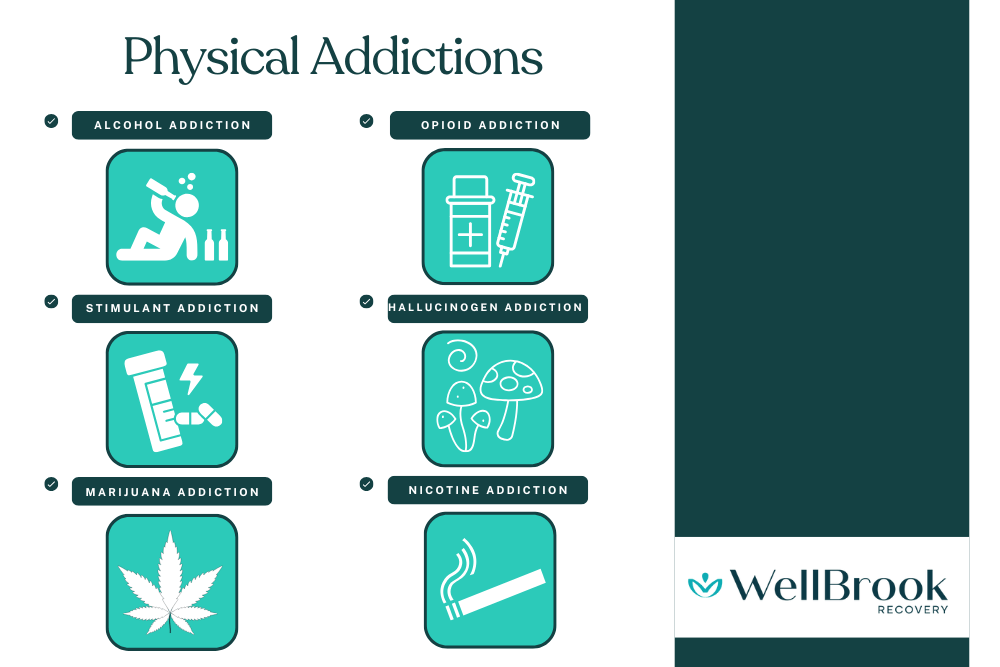
Alcohol Addiction
Alcoholism is one of the most common addictions, with 10% of adults in the U.S. struggling with an alcohol addiction. It often starts with social drinking and then progresses further to binge drinking and/or heavy drinking.
Heavy alcohol use can cause cognitive impairment and serious health issues such as liver disease. It can also lead to alcohol poisoning, which can be fatal.
Treatment of alcohol addiction generally involves detoxification, medication (such as naltrexone, disulfiram, and acamprosate) to manage withdrawal symptoms and prevent relapse, counselling, therapy, and support groups.
Opioid Addiction
Opioid addiction is when a person compulsively uses opioid drugs, one of several types of drug addiction. Opiates and opioids include both prescription painkillers, such as morphine, codeine, hydrocodone, oxycodone, and methadone, as well as illegal drugs like heroin, which is derived from morphine. Opioid addiction is often caused by over-prescription of painkillers, leading to dependency on the drug.
Opioid addiction can cause weight loss and frequent respiratory infections. When opioids are not taken, the person suffers intense nausea, muscle pain, and emotional disturbances.
Opioid addiction can be treated using medication-assisted therapy (MAT) with methadone, buprenorphine, or naltrexone, as well as counselling, behavioral therapies, and comprehensive rehabilitation programs such as residential addiction treatment programs.
Stimulant Addiction: Cocaine and Methamphetamine
Stimulants, such as amphetamine, ecstasy, and cocaine, increase alertness and energy. Cocaine, for example, causes a significant increase in energy and intense euphoria, so people who need to enhance their performance or who are struggling to cope with life stresses may turn to cocaine to help them. Cocaine addiction causes restlessness, paranoia, irritability, nasal congestion, and damage from snorting.
Treatment for cocaine addiction involves behavioral therapies (such as cognitive-behavioral therapy) and support groups. There are currently no FDA-approved medications to treat cocaine addiction.
Methamphetamine addiction causes decreased appetite, rapid heart rate, irregular heartbeat, increased blood pressure, extreme weight loss, skin sores, and severe dental problems (“meth mouth”).
Treatment for methamphetamine addiction requires comprehensive rehabilitation programs, including detoxification and various therapies, as well as medications such as bupropion to alleviate cravings and withdrawal symptoms.
Hallucinogen Addictions
Hallucinogen addiction occurs when someone repeatedly uses drugs that alter perception, mood, and thought processes. LSD, mescaline, psilocybin, and PCP are some of the types of addictive drugs that can cause visual and auditory hallucinations, a distorted sense of time, and changes in thought patterns.
Hallucinogen use can cause short-term effects such as confusion, anxiety, paranoia, and impaired judgment. Long-term or heavy use may contribute to persistent psychosis, flashbacks (hallucinogen-persisting perception disorder), and difficulties in social or occupational functioning.
Treatment for hallucinogen addiction often focuses on behavioral therapy and counseling to address psychological dependence and any co-occurring mental health issues. Supportive care and education about the risks of continued use are also important components of recovery.
Marijuana Addiction
Marijuana addiction, also known as cannabis use disorder (CUD), involves the compulsive use of the cannabis plant, known for its psychoactive properties. People often use cannabis as a coping mechanism for other mental health issues.
The use of cannabis leads to decreased cognitive functions and motivational syndrome. Cannabis affects the endocannabinoid system, which plays a role in appetite, mood, and memory.
There are currently no FDA-approved medications to help treat cannabis addiction, so treatment involves behavioral therapies (such as cognitive-behavioral therapy) and support groups.
Nicotine Addiction
Nicotine addiction is when a person becomes dependent on tobacco products. This could involve smoking cigarettes or e-cigarettes, vaping, or chewing tobacco. This addiction often develops from a very young age – nine out of ten smokers started smoking before they turned 18. Nicotine stimulates the central nervous system, enhancing mood and heart rate, which is why it is so addictive.
Millions of people die every year due to nicotine use. In fact, smoking is a leading cause of preventable deaths. The dangers of smoking are common knowledge, but smokers face intense physical and mental withdrawal symptoms when they try to quit.
Inhalant Addiction
Inhalant addiction (sometimes called solvent addiction) is when one inhales volatile substances or solvents such as glue, gasoline, lighter fuel, paint thinners, markers, cleaning fluids, aerosol sprays, or nitrites (poppers) to give oneself a feeling of intoxication. Inhalant use is often initiated in adolescence due to peer influence and the ease of accessibility of such substances.
Inhalant addiction causes a chemical odor on the breath or clothes, dizziness, euphoria, lack of coordination, and slurred speech. Long-term abuse of solvents causes serious damage to the body, including memory loss, neurological impairment, and damage to the liver, heart, and kidneys.
Behavioral Addictions: Understanding Non-Substance Dependencies
Behavioral addictions, also known as process addictions, are similar to physical addictions except that instead of being addicted to a specific substance, the person is addicted to a specific behavior, or a certain feeling experienced when they perform this behavior. Over time, they spend more and more of their time engaging in this behavior, neglecting their personal and professional responsibilities. They keep on needing more and more of the behavior over time to get the same pleasurable feelings, as they build up tolerance. They become dependent on the rush or high that comes with this behavior, and they still feel compelled to repeat it even when they can see the negative effects it has on their physical and mental health, finances, and relationships.
It’s common for behavioral addictions to occur alongside physical addictions in what’s known as a co-occurring disorder. At WellBrook Recovery, we offer many different therapies to help people struggling with a co-occurring disorder.
The following are some of the most common types of behavioral addictions.

Internet Addiction
This is when people spend hours every day surfing the web on their smartphones or computers. They may find themselves compulsively checking their devices every few minutes, ignoring their loved ones while on their devices, or becoming anxious whenever they are without their phone. They need to spend increasing amounts of time online, and they experience withdrawal symptoms and mood changes when the internet is not available.
Gambling Addiction
Gambling addiction, also known as pathological gambling or gambling disorder, is when someone engages in risky and impulsive gambling despite seeing the huge negative consequences to their mental and financial health. They place bets very frequently, make larger bets than they intended, and become irritable or aggressive when losing bets or are unable to gamble. No matter how many losses they experience, they are compelled to continue betting. They often end up exhausting their savings and starting to steal money to continue gambling.
Gaming Addiction
Video game addiction is an obsession with playing video games, often to the detriment of one’s personal life, hygiene, and academic or work responsibilities. Video games can be a fun way to unwind, but when they become an unhealthy addiction, gamers may prioritize gaming over their relationships and responsibilities. They often experience disrupted sleep patterns and a loss of interest in their previous hobbies. This addiction can also cause financial issues, as the gamer may continue to buy new games or upgrades, despite not having the funds for them. Research shows that over 5 million children could be considered addicted to video gaming.
Social Media Addiction
Social media addiction occurs when someone spends excessive time on platforms like Facebook, Instagram, TikTok, or Twitter to the point that it interferes with their daily life. People may feel a constant need to check notifications, scroll feeds, or post updates, even when it causes stress, sleep loss, or distraction from responsibilities. Over time, this pattern can lead to anxiety, low self-esteem, and difficulties maintaining in-person relationships. Nearly 50% of teenagers report feeling addicted to social media.
Food Addiction
Food addiction happens when someone repeatedly eats highly palatable foods, such as those high in sugar, fat, or salt, in a way that feels compulsive or out of control. People may eat even when they are not hungry, use food to cope with stress or emotions, and feel guilt or shame afterward. Food addiction can lead to weight gain, high blood pressure, diabetes, low self-esteem, depression, and difficulties in daily routines and relationships.
Recognizing Behavioral Addiction Patterns
Addictions, whether to substances or behaviors, share common patterns. Researchers describe six core components that help identify addictive behavior.
- Salience – The activity or substance becomes the most important thing in a person’s life, dominating thoughts and behavior.
- Mood modification – Using the substance or engaging in the behavior produces a temporary positive change in emotional state or escape from negative feelings.
- Tolerance – Over time, increasing amounts of the substance or more intense engagement in the behavior are required to achieve the same effect.
- Withdrawal symptoms – Unpleasant physical or emotional effects occur when the substance or behavior is reduced or stopped.
- Conflict – The addiction causes problems in relationships, work, or personal life, and may generate internal conflict.
- Relapse – Reverting to the addictive behavior after periods of abstinence, even after serious attempts to stop.
Recognizing these patterns can help someone understand when a habit has become an addiction and guide them towards the next step – finding support to start tackling their addiction.
Get Support for Addiction at WellBrook Recovery
Recovery from all types of addiction is possible with the right support. WellBrook Recovery offers individualized programs designed to address many addiction kinds. Treatment typically includes behavioral therapy, counseling, and support groups to help individuals manage cravings, build healthier habits, and address any underlying mental health concerns. Family involvement and structured care plans provide guidance and accountability, while ongoing support ensures long-term recovery. Seeking help early can prevent further harm and help create a path toward a balanced and healthy life. Reach out to us today, we’d love to help.
Frequently Asked Questions on Different Types of Addiction
What types of addictions are there?
Addictions can be broadly categorized into substance addictions, such as alcohol, opioids, or stimulants, and behavioral addictions, such as gambling, gaming, or social media use. Both types involve compulsive engagement despite negative consequences.
What are the most common addictions?
Some of the most common addictions include alcohol, tobacco, cannabis, prescription opioids, gambling, and social media.
What is the difference between a habit and an addiction?
A habit is a repeated behavior that may be inconvenient but does not cause serious harm, while an addiction involves a compulsive need to engage in the behavior or use a substance, often with negative physical, mental, or social consequences.
Can behavioral addictions be as serious as substance addictions?
Yes. Behavioral addictions, such as gambling or gaming, can significantly impact mental health, relationships, work, and finances, and they can trigger patterns similar to substance addiction, including cravings, tolerance, and relapse.
How can someone recover from addiction?
Recovery from addiction can include therapy, counseling, support groups, and structured treatment programs that address both the behavior and any underlying mental health concerns. Early intervention often improves outcomes and helps prevent further harm.