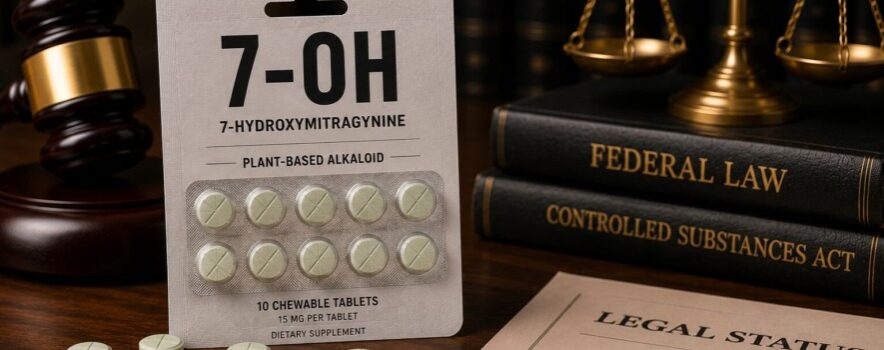
As of October 21, 2026, 7-OH remains legal in the US at the federal level. States and local regulations vary. Read on to hear about the expected upcoming regulations.
Is 7-OH legal in the United States? The latest update, Oct. 2026
In July, The DEA announced its intent to schedule 7-OH. In August, the agency announced an extended public comment period about the substance. In October, following recommendations from the HHS, they revised their scheduling recommendations.
The revised notice states that on or after November 13, 2026, a temporary scheduling order on 7-OH will be put into effect. This means that 7-OH will be a Schedule I drug for the next two years, and in the meantime, will undergo standard review procedures to determine if it should be permanantly scheduled.
In the meantime, until the new regulations can take effect, 7-OH remains legal at the federal level.
Timeline of the DEA attempt to schedule 7-OH
- July 1, 2026: the DEA filed a notice of intent to temporarily schedule 7-OH.
- July 6, 2026: the document was published in the Federal Register and it says that the DEA intends to schedule 7-OH on or after August 5, 2026.
- August 6, 2026: The DEA extended the comment period on the proposed temporary scheduling of 7-OH. That same day, several kratom related substances, including MGM-15, were scheduled.
- October 8 2026: Department of Health and Human Services (HHS) provided an updated recommendation to the DEA. The recommendation introduced revised ratio and concentration thresholds.
- October 9, 2026: The DOJ announced revised scheduling actions following updated recommendations from the HHS.
- October 14, 2026: The DEA published a revised notice of intent proposing Schedule I controls for 7-OH. DEA’s notice says the temporary scheduling order for 7-OH will be published on or after November 13, 2026.
When finalized, the rule would make 7-OH a federally controlled Schedule I drugs, and included 7-OH products will be illegal in the United States. Until the rule is finalized and takes effect, 7-OH’s federal legal status remains subject to existing laws and regulations. However, 7-OH may already be restricted or prohibited under state or local laws, so its legality depends on the applicable jurisdiction and product.
What 7-OH substances are being scheduled?
Following recommendations from the HHS, the DEA revised it’s recommendations of what 7-OH products to schedule. The DEA now proposes temporarily placing 7-hydroxymitragynine (7-OH) in Schedule I of the federal Controlled Substances Act when it meets either of two criteria:
| Criterion | Proposed threshold |
|---|---|
| Concentration in solid products | More than 1 mg per gram |
| Concentration in liquid products | More than 1 mg per milliliter |
| Mitragynine-to-7-OH ratio | Less than 100:1 |
Why is 7-OH being scheduled?
The DEA, in their statement about the scheduling, says that “7-OH is a psychoactive substance with opioid-like effects and similar risks” and that they “believe these substances pose an imminent threat to public safety given their effects are highly unpredictable”.
Will the scheduling be permanent?
The proposed scheduling is a temporary order set to last two years and can be extended up to one year thereafter. In the interim, the Government, including the DEA, the HHS, and the FDA will be able to evaluate the substance, and undergo the full review process that a substance needs to be permanently scheduled.
States that scheduled or banned 7-OH products
7-OH Legal Status
Hover any state to see its 7-OH (7-hydroxymitragynine) restriction status. The picture is shifting fast — check your local regulations before relying on this map.
Informational only and not legal advice. 7-OH regulation is changing rapidly; verify your state and local laws before acting.
Besides for these proposed national regulations, several states have either scheduled, or banned 7-OH products. The exact scope of the ban depends on individual state regulations. Because state laws and emergency rules change frequently, readers should check current state and national law before purchasing or possessing 7-OH products. States with 7-OH regulations include:
- Alabama
- Arkansas
- Connecticut
- Colorado
- California
- Florida
- Kansas
- Kentucky
- Indiana
- Louisiana
- Mississippi
- Washington DC
- Vermont
- Virginia
- Tennessee
Frequently Asked Questions About 7-OH Legality
As of October 21, 2026, 7-OH is not yet prohibited at a federal level. The DEA has announced that it intends to schedule 7-OH, but that scheduling has not yet taken effect. However, several states and local jurisdictions already restrict or prohibit 7-OH products.
No. The DEA has announced that it plans to schedule 7-OH, but that order will only be finalized on or after November 13, 2026.
The DEA has stated that the temporary scheduling order will be published on or after November 13, 2026. The actual start date depends on when the order is published and takes effect.
7-OH remains permitted in some jurisdictions, but state laws vary. Some states prohibit it, while others restrict products containing certain concentrations. Check your state’s current laws before purchasing or possessing 7-OH.
No. As of October 21, 2026, the proposed federal Schedule I controls for qualifying 7-OH products are not yet in effect. However, other federal requirements and state or local restrictions may apply to particular products.
The DEA extended the public comment period on its’ proposed 7-OH ban. On Oct 14, 2026, the DEA published a revised notice of intent proposing Schedule I controls for 7-OH. DEA’s notice says the temporary scheduling order for 7-OH will be published on or after November 13, 2026.
Are you ready to be given a new chance at health and happiness? Be your true best self? Has going it alone not been working? Perhaps you’re concerned about a loved one and want to support them in obtaining the help they need to get better?
Wellbrook Recovery has extensive experience and expertise assisting individuals with all types of substance abuse struggles. Providing compassionate and cutting-edge, multi-pronged addiction recovery care at our beautiful, upscale facilities.
Our highly regarded, expert team of multi-licensed therapists and specialists will make your success their own and will hold your hand throughout, regardless of where you currently at. We’ve done it hundreds of times, helping individuals and families reclaim their lives, their confidence, and their smiles.
Just reach out.
We’ll walk you through the simple admission process and answer any and all questions.
We understand that addiction affects everyone differently, which is why we offer a range of treatment options designed to meet your individual needs. Our treatment center provides the following programs:
Drug & Alcohol Detox: Detoxification is often the first step in recovery. Our facility provides medically supervised detox to help clients safely manage withdrawal from drugs or alcohol in a supportive environment.
Inpatient Drug Rehab: Inpatient treatment offers a structured environment so clients can focus on recovery free from distractions. It’s ideal for those at the beginning of their recovery journey who need intensive, around-the-clock care to overcome addiction.
Day rehab – Partial Hospitalization Program (PHP): As clients transition from inpatient care to a more independent lifestyle, PHP gives them the support they need as they continue on their road to recovery. By spending much of the day in rehab but the evenings at home, clients reinforce the life and recovery skills they learned during inpatient treatment.
Outpatient Treatment Programs (Day/Evening): For those who need more flexibility, outpatient programs allow clients to continue living at home while attending treatment on a part-time basis.
Wellbrook Recovery believes in treating the whole person, not just the addiction. Our services go beyond detox and inpatient care to ensure a complete recovery process:
- Mental Health Support: Addiction often co-occurs with mental health disorders such as anxiety, depression, trauma and PTSD. Our team of mental health professionals works closely with clients to treat both the addiction and any underlying mental health issues.
- Behavioral Therapy: We utilize proven behavioral therapies such as CBT, DBT, IFS, EMDR, Biofeedback, Music Therapy, Art Therapy, among other advanced therapies to help individuals address the root causes of addiction, develop coping skills, and make lasting changes in their lives.
- Support Groups: Our support groups provide individuals with the opportunity to connect with others who are going through similar struggles. Peer support is an essential part of the recovery journey.
- Family Programs: Addiction impacts not only the individual but also their loved ones. Our family programs educate and support families, helping them to rebuild relationships and provide ongoing support.
- Alumni & Aftercare: We have a network of our close-knit alumni community, with events and support to stay in touch with your recovery and “battle brothers & sisters” from your time in treatment.