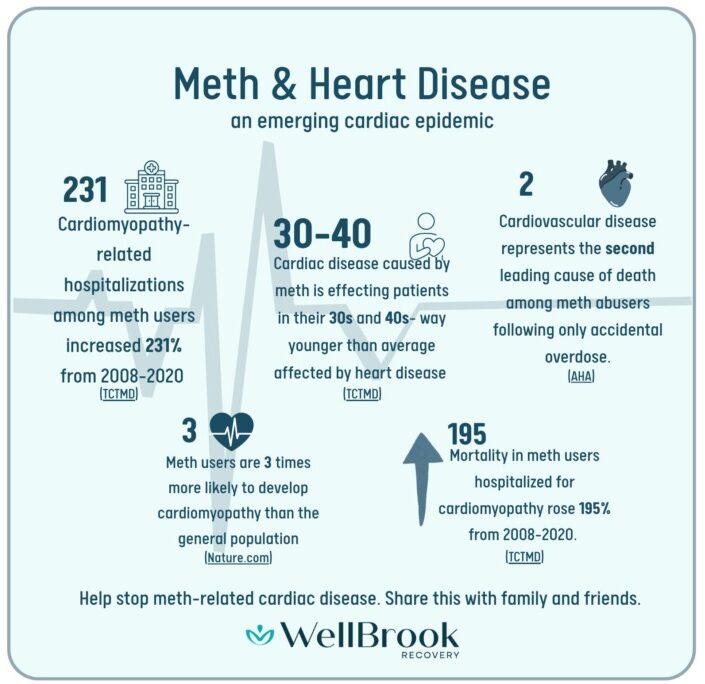
An emerging cardiac epidemic. A tsunami. (JACC Journals) Alarmingly common. A true public health issue. (Dr. John Richards) Different terms being used by researchers to describe the same thing: Meth use is increasingly being linked to a host of serious heart diseases, and while the concept isn’t new, the numbers are.
As meth use rises in the US, so does its debilitating effects. And now, what was once a rare occurrence described in medical papers and studies is now rapidly increasing– young patients, with no prior heart conditions and no predispositions to heart disease- are presenting with heart diseases, their only indication for heart disease being their methamphetamine use.
What is methamphetamine and how does it work in the body?
Methamphetamine is a popularly abused drug which acts as a nervous system stimulant. Stimulants have the opposite effect of opioids. Opioids depress the nervous system, producing calming effects, stimulants, like meth, ‘wake up’ the nervous system, producing effects like euphoria, increased energy, alertness, reduced appetite and the decreased need for sleep.
How Methamphetamine damages the heart
The same properties that stimulate the nervous system put the heart into overdrive- releasing adrenaline and putting the heart into stress mode. Methamphetamine results in an acute, rapid increase in both heart rate and blood pressure
The stress put on the heart causes burnout and leads to a host of cardiac issues. Its like forcing an engine to run too fast, for too long.
Heart conditions linked to methamphetamine use
Meth use is associated with a host of heart conditions, most of which in the general population hit in the middle ages, while in meth users; these heart diseases are hitting decades earlier.
Heart diseases caused by meth includes:
- pulmonary hypertension– elevated blood pressure in the arteries in the lungs, which forces the heart to work harder to pump blood through them.
- Vasospasm- meth use triggers spasms, or when the vessels leading to the heat constrict, which leads to chest pain, heart muscle injury, and heart attacks,
- Arrhythmias– methamphetamine disrupts the heart’s electrical system, which induces structural and electrical remodeling of cardiac tissue, leading to lethal arrhythmias( Irregular heart rhythms)
- Cardiomyopathy– Besides the damage caused by overtaxing the heart, meth directly poisons the heart muscle through a variety of mechanisms, which leads to cardiomyopathy- a weakening of the heart muscle
- Atherosclerotic cardiovascular disease- (ASCVD) is caused by plaque buildup that hardens and narrows the arteries, restricting blood flow.
Source: AHA
Symptoms of meth-induced heart disease
Symptoms of meth-associated heart disease include:
- Shortness of breath — especially during activity, and in more severe cases, even at rest
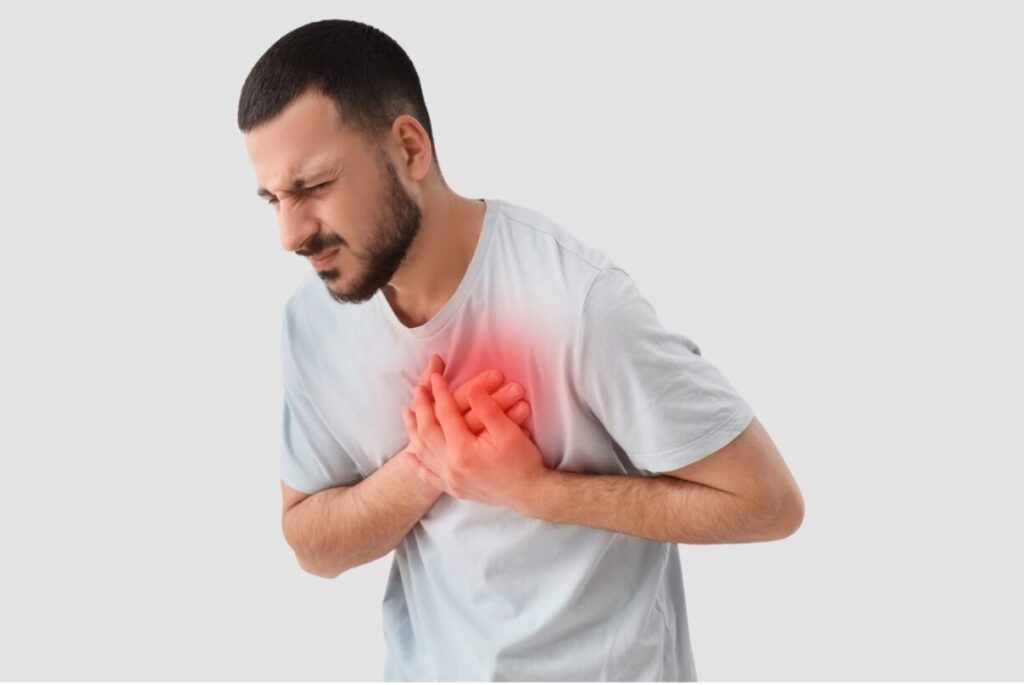
- Chest pain or pressure
- Rapid heart rate (a racing heartbeat)
- Irregular heart rhythms or heart palpitations
- Extreme fatigue or weakness
- Reduced ability to exercise or perform normal daily activities
- Swelling in the legs or feet (a common sign of heart failure)
- Fainting or near-fainting episodes
In many cases, these symptoms reflect developing heart failure or serious rhythm disturbances. Anyone experiencing these warning signs — especially with a history of meth use — should seek immediate medical attention.
The resurgence of methamphetamine use in the US
Meth use is increasing in the USA
Some blame a decreasing fentanyl supply; others say that meth’s long lasting euphoric effects and cheaper prices are driving its popularity. Whatever the cause, Meth use is steadily increasing in the USA. The NIH reports that from 2015-2019, meth use increased by 43%. And as use increases, meth induced heart disease, which was once a little-known side effect of meth use is playing itself out every day in Emergency Rooms and clinics across the country.
The increase of meth use in Ohio
The Ohio Substance Abuse Monitoring report finds that meth is highly available in the state, and users perceive it as being safer than opioids.
The increase in meth use in Wisconsin
The Wisconsin Department of Health Services warns that meth use is seeing a resurgence in popularity in the state in recent years.
Mike Nichols, President of the Badger Institute, a Wisconsin based news group, warns that meth is considered a more benign substance then opioids because overdoses aren’t as common as with opioids. But he warns that “death should not be the only thing users or the rest of us fear.”
Long-term heart damage from methamphetamine
Even after quitting the drug, meth still affects the heart
Research suggests that once meth causes heart damage, the disease may progress, even if the individual stops using. Once scarring of the heart sets in, full recovery may be difficult, even with complete meth abstinence.
The disease isn’t limited to users dependent on meth. It affects habitual users too.
Additionally, some people may be genetically more vulnerable to meth’s heart effects, meaning serious disease can develop faster and at lower levels of use.
What this means: Anybody with a history of meth use, whether dependent or not, whether currently using or not, is at risk for heart diseases caused by the drug.
How to stop meth associated heart disease
Some researchers say that if meth users with heart failure go through treatment programs and stop using, depending on the amount of damage, there is potential to reverse some heart damage.
The challenge lies in doctors to identify those patients, because they often have a hard time trusting doctors and don’t want to disclose their drug use.
How to prevent cardiac disease caused by meth
Avoid meth use
The single most powerful way to prevent meth-associated heart disease is simple: don’t use meth. Every exposure puts stress on the heart, and repeated stress adds up.
Get help for meth addiction
Getting professional help for meth addiction can stop ongoing damage to the heart and, in some cases, allow early injury to improve.
Regular checkups
Anyone with current or past meth use should discuss it with their doctor and ask about blood pressure checks, heart rhythm screening, and whether further cardiac testing is needed.
Mohammad Alfrad Nobel Bhuiyan, PhD (Louisiana State University Health Sciences Center at Shreveport), a researcher on the subject of meth induced heart disease, urges that drug rehabs have a crucial role to play in preventing heart diseases. He urges that in addition to treating meth addiction, practitioners should be alert to patients’ potential cardiovascular conditions, “just to make sure that their heart is not damaged.”
At Wellbrook Recovery, we offer comprehensive detox and recovery programs to treat meth use disorder. Additionally, we constantly monitor the heart and stay alert for any potential cardiac damage caused by meth use. Any client with presenting with any sort of cardiac symptoms is referred to cardiac specialists for further testing.
FAQs about Meth- induced heart disease
Yes. Methamphetamine use is strongly associated with several forms of heart disease, including cardiomyopathy, arrhythmias, pulmonary hypertension, and atherosclerotic cardiovascular disease. The drug increases heart rate and blood pressure while flooding the body with stress hormones, which can damage heart muscle over time and lead to early-onset heart failure.
Symptoms may include shortness of breath, chest pain or pressure, rapid or irregular heartbeat, extreme fatigue, swelling in the legs or feet, and fainting episodes. These signs can indicate developing heart failure or dangerous rhythm disturbances and require medical evaluation.
In some cases, early meth-related heart damage may partially improve if a person stops using the drug and receives appropriate medical care. However, once significant scarring or structural changes develop, full recovery becomes difficult. Early intervention offers the best chance of improved heart function.
It can. Research suggests that once methamphetamine causes structural damage to the heart, the disease may continue to progress even after drug use stops — particularly if scarring has developed. This is why early treatment and medical monitoring are critical.
No. While heavy and long-term use increases risk, heart disease has been reported in habitual users and even in individuals without long-standing addiction. Some people may also be genetically more vulnerable, meaning serious heart complications can develop more quickly and at lower levels of use.
Are you ready to be given a new chance at health and happiness? Be your true best self? Has going it alone not been working? Perhaps you’re concerned about a loved one and want to support them in obtaining the help they need to get better?
Wellbrook Recovery has extensive experience and expertise assisting individuals with all types of substance abuse struggles. Providing compassionate and cutting-edge, multi-pronged addiction recovery care at our beautiful, upscale facilities.
Our highly regarded, expert team of multi-licensed therapists and specialists will make your success their own and will hold your hand throughout, regardless of where you currently at. We’ve done it hundreds of times, helping individuals and families reclaim their lives, their confidence, and their smiles.
Just reach out.
We’ll walk you through the simple admission process and answer any and all questions.
We understand that addiction affects everyone differently, which is why we offer a range of treatment options designed to meet your individual needs. Our treatment center provides the following programs:
Drug & Alcohol Detox: Detoxification is often the first step in recovery. Our facility provides medically supervised detox to help clients safely manage withdrawal from drugs or alcohol in a supportive environment.
Inpatient Drug Rehab: Inpatient treatment offers a structured environment so clients can focus on recovery free from distractions. It’s ideal for those at the beginning of their recovery journey who need intensive, around-the-clock care to overcome addiction.
Day rehab – Partial Hospitalization Program (PHP): As clients transition from inpatient care to a more independent lifestyle, PHP gives them the support they need as they continue on their road to recovery. By spending much of the day in rehab but the evenings at home, clients reinforce the life and recovery skills they learned during inpatient treatment.
Outpatient Treatment Programs (Day/Evening): For those who need more flexibility, outpatient programs allow clients to continue living at home while attending treatment on a part-time basis.
Wellbrook Recovery believes in treating the whole person, not just the addiction. Our services go beyond detox and inpatient care to ensure a complete recovery process:
- Mental Health Support: Addiction often co-occurs with mental health disorders such as anxiety, depression, trauma and PTSD. Our team of mental health professionals works closely with clients to treat both the addiction and any underlying mental health issues.
- Behavioral Therapy: We utilize proven behavioral therapies such as CBT, DBT, IFS, EMDR, Biofeedback, Music Therapy, Art Therapy, among other advanced therapies to help individuals address the root causes of addiction, develop coping skills, and make lasting changes in their lives.
- Support Groups: Our support groups provide individuals with the opportunity to connect with others who are going through similar struggles. Peer support is an essential part of the recovery journey.
- Family Programs: Addiction impacts not only the individual but also their loved ones. Our family programs educate and support families, helping them to rebuild relationships and provide ongoing support.
- Alumni & Aftercare: We have a network of our close-knit alumni community, with events and support to stay in touch with your recovery and “battle brothers & sisters” from your time in treatment.